Li Sao — The Art of Releasing Negative Emotions
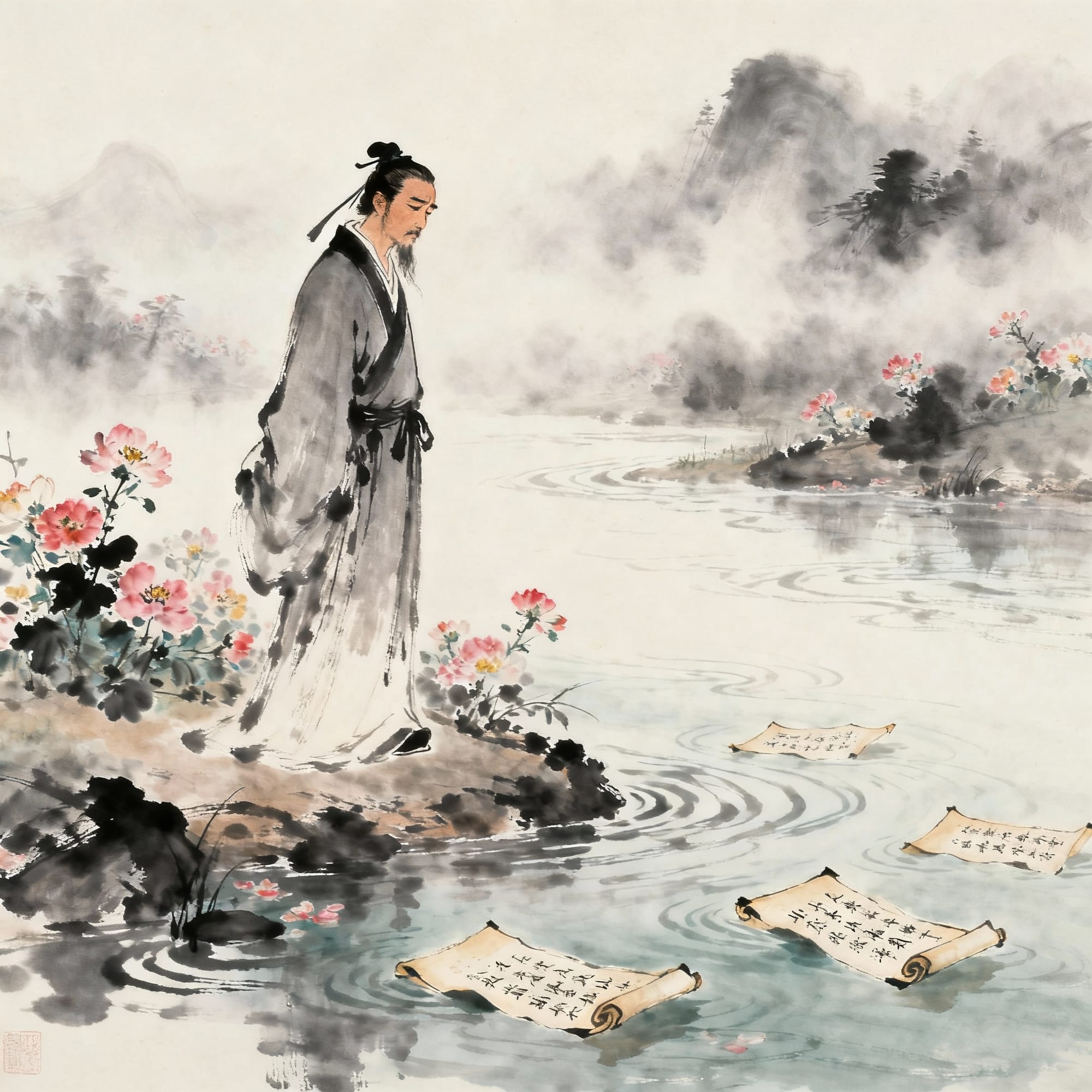
“I allow my sorrow, my anger, my loss to be seen—not as weakness, but as the start of renewal. My emotions carried are my truth heard.”
The ancient Chinese poem Li Sao, attributed to Qu Yuan, records the poet’s exile, despair and spiritual journey—an emblem of how unspoken emotions become internal storms. This article uses Li Sao as metaphor: exploring why we suppress negative feelings, how we can transform them into strength, and offering a three‑step method plus a four‑week plan to move from “silent burden” to “expressive clarity.” Includes a full practice template to support your emotional expression.
Imagine being isolated, misunderstood, wounded by rejection—and yet carrying a voice that refuses to vanish. Qu Yuan, cast out of his state, wrote not only of politics but of inner exile. In your life you may carry an unspoken ache, a disappointment, a sorrow you feel but cannot share. This is your stanza of Li Sao. Tonight let’s grant your emotions room to speak, so they become bridges not burdens.
(a) Symbol of Li Sao: Unspoken Pain, Longing, and Expression
Li Sao is a lament of a loyal figure betrayed, yet still reaching for the heavens in metaphor and spirit. It shows us: suppressed feelings don’t vanish—they resound.
(b) Why We Often Keep Negative Emotions Silent
- Because being angry or sad may be seen as weak or unacceptable.
- Because our culture may value endurance more than expression.
- Because we mistake expressive release for uncontrolled venting. When emotions are buried they grow roots underground. When they are voiced wisely, they become renewal.
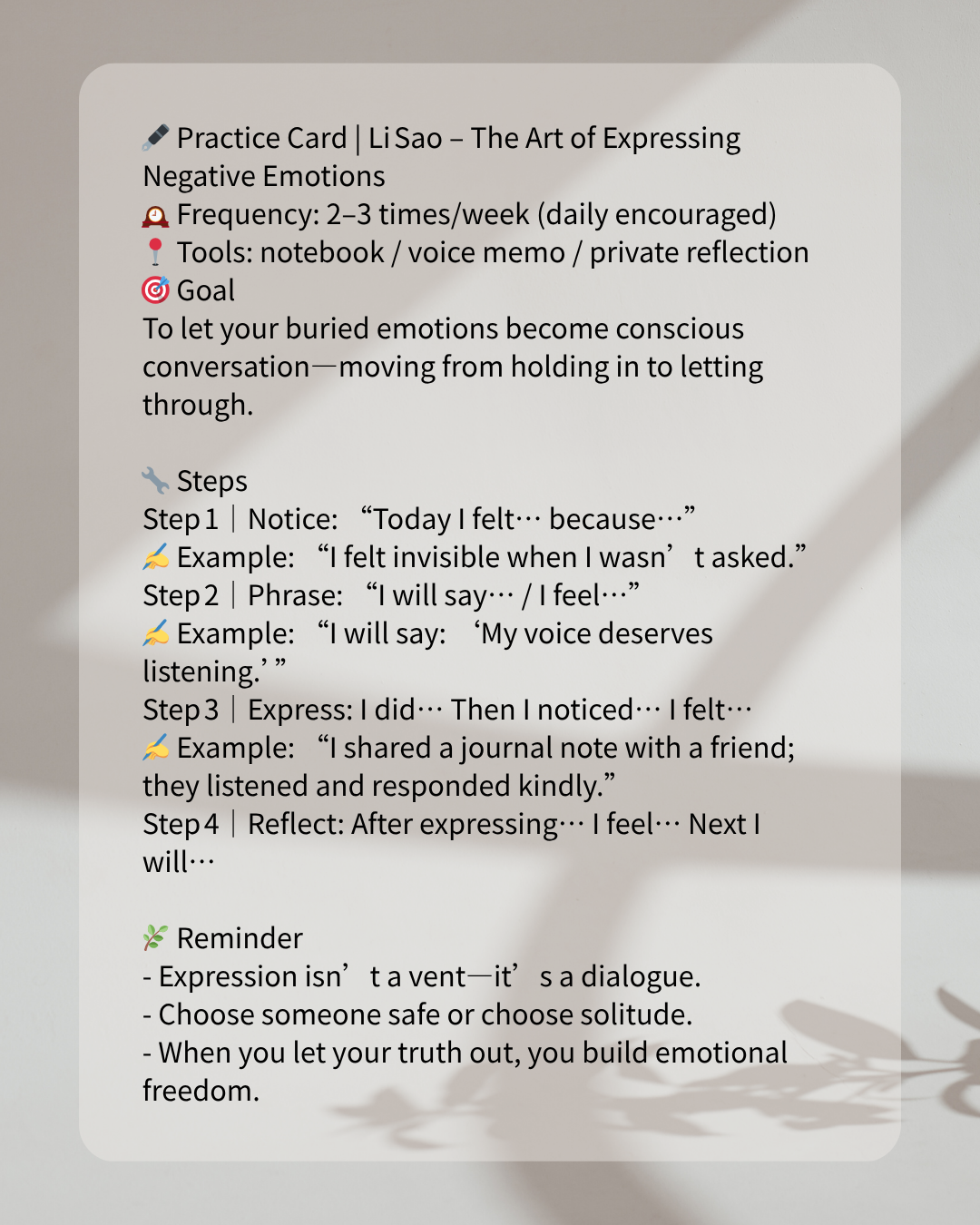
(c) Three‑Step Method: Notice → Phrase → Express
- Notice – Pause: What’s my strongest emotion right now? What do I most want to say but hold back? Example: “I felt unvalued when my idea was ignored.”
- Phrase – Write one sentence you’re willing to say: to yourself, to another, or on paper. Example: “I was ignored, but my voice matters.”
- Express & Reflect – Choose a way to release: write a note, speak to someone, or hold an inner dialogue. Then reflect: how did I feel? What changed? Example: “I told my colleague: ‘I feel unseen when my idea isn’t heard.’ They paused, asked me more.”
(d) Four‑Week “Emotional Expression” Plan
If you feel stuck in cycles of shame, suppression, or silent hurt—this journey of Li Sao invites you to voice instead of bury.

Self-connection Mini Practice
- What’s the last moment I felt hurt, angry, betrayed—and didn’t say anything?
- If I could write one true sentence about how I felt, what would it be?
- This coming week I will use one safe way to express that sentence. How will I measure change?
Releasing isn’t losing—it’s reclaiming. Speaking isn’t weakness—it’s clarity. If you’d like more stories, metaphors and reflections guiding emotional expression: 👉 Tap here to explore more about sacred expression, emotional truth & transformation. When you speak your own stanza—you don’t just echo—you compose.
★ Thank you for being a part of 5 Mins Bliss and for your continued support. And You can also read a web version of this newsletter on 5minsbliss.com. If you enjoy this newsletter, please consider sharing it with others via: Facebook, Twitter, Linkedin, WhatsApp, or email. . Together, let’s spread this journey of growth and inner peace to more hearts in need. ★
Sacred Beasts Collection
Quick note for 5 Mins Bliss readers. My day job is actually 15 years as a Japan tour guide. I distilled that field experience into a new e-book, “From Burnout to Bliss: The AI Travel Fix,” with copy-and-paste prompts and simple workflows to fix 20 common trip-planning pains. If you’re planning a trip now—or want a faster way to handle travel hassles—this book is for you.
👉 Product page: (This promotional price is offered exclusively to readers of 5 mins Bliss.)


And if you'd like to keep these mythical blessings and affirmations close, feel free to click the Gumroad link (https://bird99711.gumroad.com) or scan the QR code below to bring home your personal guardian.