The Three Moves of Mencius’ Mother — How Your Growth Environment Shapes Your Emotional & Developmental Path
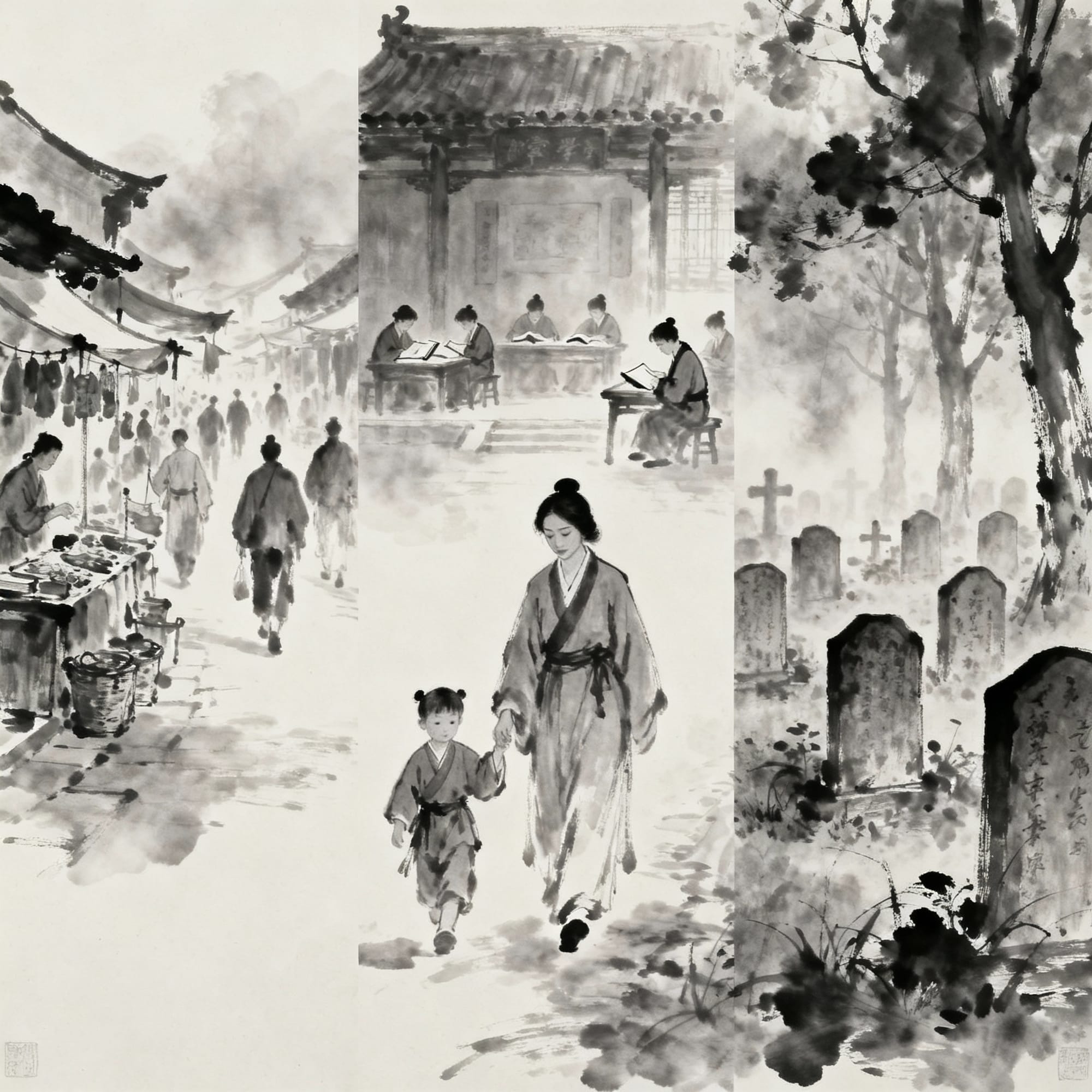
“I choose the environment that nourishes my heart and nurtures my growth. When the space around me supports me rather than constrains me, my inner world flourishes.”
Often we underestimate the role of our surroundings—where we live, who we spend time with, the ambient sounds and rhythms—in influencing our emotions and growth. The story of Mencius’ mother moving three times to find a home that would best support her son illustrates exactly this. In this article you’ll discover: (1) why environment significantly impacts emotional state; (2) how your current surroundings may be quietly shaping your growth; and (3) a three‑step method plus a four‑week plan to help you intentionally shape a supportive environment for yourself. A full practice template is included for deeper application.
In the early morning mist you hear the market calls, or the quiet hum of a school. Those sounds are the language of your environment—always speaking, always shaping. Imagine the young 孟子, his mother moving from cemetery, to marketplace, to the school neighbourhood—each relocation wasn’t just physical, it was changing the soil in which he would grow. In your own life, if your surroundings are mis‑ aligned, your energy may be drained; but if they align, you awaken, expand, bloom. Let’s begin: examine your territory—does it support you or stall you?
(a) The Symbol of the Three Moves: Environment & Silent Influence
The saying “Mencius’ mother moved house three times” originates from ancient China: first near a graveyard, then near a noisy market, finally near a school. The lesson: one’s growth is influenced by the company one keeps and the surroundings one inhabits. Modern educational research reinforces this: environment subtly but powerfully shapes habits, emotion, values and outcomes.
(b) Why Environment Influences Emotion & Growth Deeply
- Sound & rhythm: Graveyard wailing vs market bargaining vs scholarly recital—each sets a feel, a pace, a mindset.
- Behavior models: Children imitate what they see around them; when environment models chaos or commerce, focus is lost.
- Emotional field: A calm, respectful space invites confidence and openness; a noisy, pressured setting tends to trigger anxiety or suppression. Thus, choosing environment isn’t just about location—it’s about what you become there.
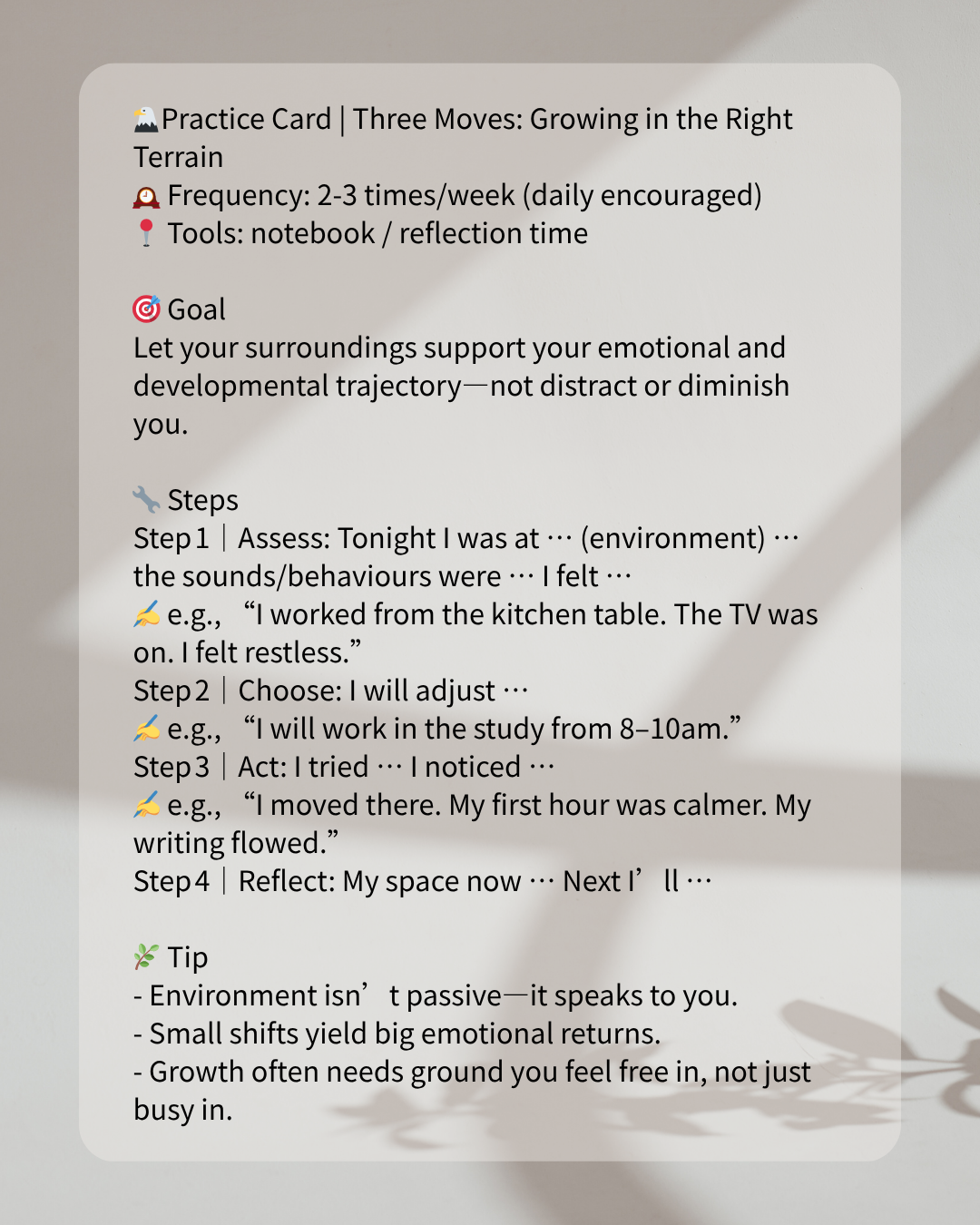
(c) Three‑Step Method: Assess → Choose → Act
- Assess: Ask: “What is the present setting of my life (work, home, social)? What sounds, rhythms, behaviors are dominant? How do I feel here?” e.g., “In my open‑plan office I hear constant phone rings and chatter—I feel scattered.”
- Choose: Select an environment or modify a factor so it better supports your growth. e.g., “I will switch to working from my quiet study for the first two hours of the day.”
- Act: Implement that change and monitor: “How do I feel now? Is the space aligned with me?”
(d) Four‑Week “Growth Environment” Plan
If you feel stuck, anxious, or perpetually busy yet unfulfilled—it may be your environment not you. The story of Mencius’ mother reminds us: growth doesn’t only happen inside, but also through where you live, work, play.

Self-connection Mini Practice
- When was the last time I felt stuck or drained? What place or setting was I in?
- If I could redesign my “growth environment” today, what would I change?
- One month from now, what emotional or productivity shift do I hope to see because of that change?

Environment is not just backdrop—it’s a force shaping your inner world. If you’re open to more reflections, cultural metaphors and spatial tools to help you align where you are with who you’re becoming: 👉 Tap here to explore more about growth terrain, emotional environment & developmental alignment. When you settle into the right space—you don’t just exist—you expand.
★ Thank you for being a part of 5 Mins Bliss and for your continued support. And You can also read a web version of this newsletter on 5minsbliss.com. If you enjoy this newsletter, please consider sharing it with others via: Facebook, Twitter, Linkedin, WhatsApp, or email. . Together, let’s spread this journey of growth and inner peace to more hearts in need. ★
Sacred Beasts Collection
Quick note for 5 Mins Bliss readers. My day job is actually 15 years as a Japan tour guide. I distilled that field experience into a new e-book, “From Burnout to Bliss: The AI Travel Fix,” with copy-and-paste prompts and simple workflows to fix 20 common trip-planning pains. If you’re planning a trip now—or want a faster way to handle travel hassles—this book is for you.
👉 Product page: (This promotional price is offered exclusively to readers of 5 mins Bliss.)

And if you'd like to keep these mythical blessings and affirmations close, feel free to click the Gumroad link (https://bird99711.gumroad.com) or scan the QR code below to bring home your personal guardian.