The Mountain's Terrain - How Your Environment Shapes Every Decision You Make
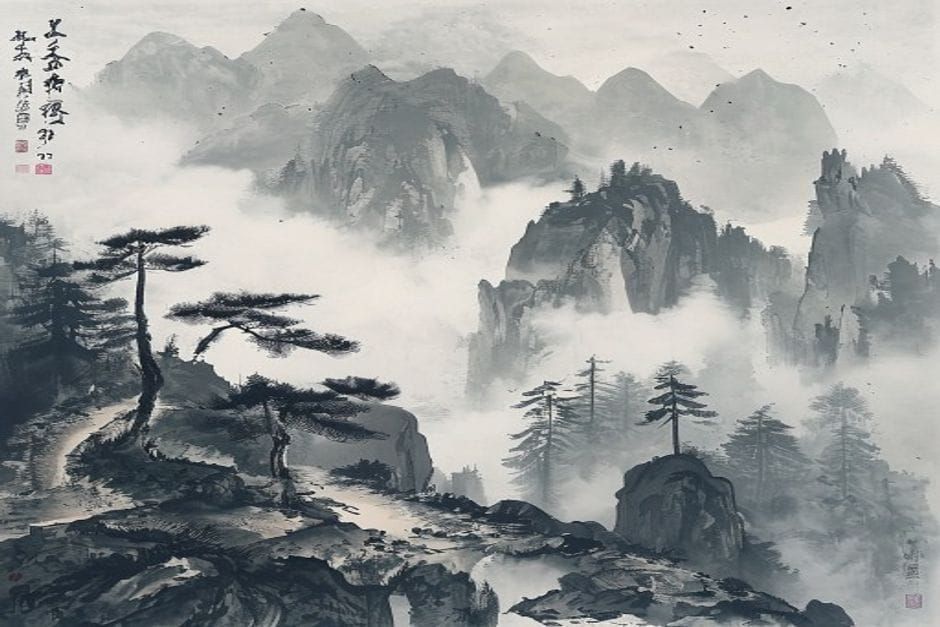
"The general who knows the terrain knows where he will win before the battle begins. The one who ignores it has already lost half his army."
— Sun Tzu, The Art of War, Chapter X: Terrain
Sun Tzu was not merely a tactician of swords and shields. When he wrote his tenth chapter on terrain — 地形篇 — he was describing something far more universal: the way the ground beneath our feet determines what is possible before we even take a single step. A general who surveys the mountain passes, the boggy lowlands, the open plains before committing his forces is not being timid. He is being intelligent. He understands that the environment is a silent commander, issuing orders that no soldier can disobey. We in the modern world face the same truth every single day, yet we consistently ignore it. We berate ourselves for failing at resolutions. We blame our willpower. We call ourselves undisciplined. Sun Tzu would quietly point to the mountain and ask: did you choose your terrain wisely?
Imagine a scholar in the Tang dynasty preparing for the imperial examinations. He does not simply sit down and hope inspiration will find him. He rises before dawn, lights a single oil lamp, arranges his brush and ink stone in their exact positions, faces the wall so the window's noise cannot reach him. Every element of his physical space has been consciously arranged to serve one purpose: deep, uninterrupted thought. He is practicing what Sun Tzu described centuries before — reading the terrain, adjusting for its advantages, eliminating its hazards. Now picture a modern professional trying to write a report while their phone buzzes on the desk, three browser tabs glow with notifications, a colleague chats loudly nearby, and the coffee they intended to drink sits cold and forgotten. The intention was the same. The terrain was entirely different. The outcome was inevitable before either person typed a word.
(a) The Mountain 山: What terrain design really teaches about lasting change
The mountain in Chinese classical thought is never merely a geographic feature. It represents permanence, perspective, and the capacity to shape everything that flows around it. Rivers bend around mountains. Storms break over them. Civilizations build their capitals in their shadows for protection. When Sun Tzu instructs the general to know his terrain, he is pointing to the mountain as the primary architect of outcomes — not the individual soldier's courage, not even the general's tactical genius, but the immovable structure of the land itself.
In the terrain of your daily life, your mountains are your designed environments. Your bedroom determines the quality of your sleep. Your desk arrangement determines your capacity for deep work. The apps on the first screen of your phone determine where your attention goes within thirty seconds of waking. These are not neutral backdrops. They are active forces shaping your behaviour with the quiet, relentless authority of a mountain shaping weather patterns. The extraordinary irony of modern self-help is that it almost entirely focuses on changing the soldier — developing more willpower, stronger motivation, better morning routines — while leaving the mountain entirely untouched.
Sun Tzu's 地形篇 distinguishes six types of terrain: accessible ground, entangling ground, temporising ground, narrow passes, precipitous heights, and positions at great distance. Each requires a different strategy. But the deeper lesson is not the categories themselves — it is the underlying principle that the wise leader studies, names, and responds to the terrain rather than pretending it does not exist. When you acknowledge that your environment is actively working either for you or against you at every moment, you stop fighting an invisible war and start making strategic choices about the ground you stand on.
(b) Why environment design remains so rare among motivated people
- We overestimate willpower and underestimate friction. Contemporary culture celebrates the hero who overcomes adversity through sheer force of character. We admire discipline. We read biographies of people who woke at 4am in freezing rooms to write their masterpieces. This narrative, while inspiring, creates a dangerous illusion: that virtue and effort are the primary variables in personal change. Behavioural science has shown repeatedly that friction — the number of steps required to perform a behaviour — is one of the most powerful predictors of whether that behaviour happens. Adding two extra steps to opening a social media app reduces usage dramatically. Placing a book on your pillow increases reading time. These are not motivational victories. They are engineering victories. But because they feel too simple, too passive, too much like "cheating," most people dismiss them and return to the exhausting task of trying to out-willpower their environment.
- We design for aspirational selves rather than actual selves. When we imagine our future environment, we picture the person we want to become rather than the person we currently are. The aspiring morning exerciser buys a treadmill and places it in the middle of the living room. This seems logical. But the actual self — tired, cold, seeking comfort at 6am — encounters a machine that feels like an accusation. Terrain design must begin with honest observation of present behaviour, not wishful thinking about future behaviour. Sun Tzu would never plan a campaign based on the army he wished he had. He would study the army standing before him, with all its actual capabilities and limitations, and design his terrain strategy accordingly.
- We treat environment as static rather than dynamic. Most people arrange their spaces once and consider the matter settled. The desk is here. The phone charges there. The television faces the sofa. These arrangements calcify into invisible infrastructure, operating below conscious awareness. But terrain is never static — seasons change it, new technology reshapes it, relationships alter it. Sun Tzu's general scouts his terrain repeatedly throughout a campaign, not just at its outset. Effective environment design requires the same iterative attention: regular audits of what is working, what has shifted, what needs to be redesigned in response to the changing conditions of your actual life.
(c) Three-Step "Terrain Survey": Observe → Remove Obstacles → Build Channels
Sun Tzu conducted his terrain surveys before battle, not during. The three steps below follow the same logic: clarity first, then strategic action, then the patient work of channelling natural momentum.
- Observe your current terrain without judgment — Before changing anything, spend one full week simply watching yourself. Where do you naturally drift? What do you reach for without thinking? Which spaces in your home energise you and which drain you? One reader described this process: "I realised I was spending forty minutes every morning not doing the things I wanted to do, but simply migrating through my apartment from one friction point to the next — searching for my journal, untangling my earphones, clearing yesterday's dishes to make room for my coffee. The morning wasn't failing because I lacked discipline. It was failing because my terrain was designed by accident." Record these observations without any urgency to fix them. You are the general scouting the pass before deciding whether to advance or retreat. Data gathered now will save enormous effort later.
- Remove obstacles between you and desired behaviour — Once you have mapped your terrain accurately, identify the single point of highest friction between your present self and your most desired habit. Not all friction, just the highest. Then reduce it by one step. If you want to meditate in the morning, do not try to build a perfect meditation corner. Simply place your cushion where your feet will land when you get out of bed. One reader shared: "I stopped trying to motivate myself to go to the gym and instead slept in my workout clothes. The barrier between sleep and exercise shrank from a mountain to a small stone. Within three weeks, the habit had become nearly automatic." Sun Tzu did not ask his soldiers to cross impossible terrain. He found the narrow pass and sent them through it.
- Build channels that make good choices the path of least resistance — The final step moves from removal to construction. After clearing obstacles, you deliberately sculpt the terrain so that desired behaviours flow naturally, the way water finds the easiest downhill path. A professional writer described her approach: "I don't try to avoid social media. I simply make my manuscript file the only thing visible on my screen when I open my laptop. The terrain pulls me toward the work before my conscious mind has decided anything." This is terrain as silent strategy. No willpower required. No motivational speeches. Simply a mountain shaped so that the river has no choice but to flow in the direction you have chosen.
(d) Four-Week "Terrain Mastery" Plan
This plan follows Sun Tzu's military sequence: survey, position, fortify, advance. Each week builds on the previous, transforming your environment from accidental to intentional.
| Week | Focus | Practice |
|---|---|---|
| Week 1 | Terrain Survey | Each evening, spend 5 minutes writing one observation about where your energy went that day and which physical spaces or digital environments influenced that direction. |
| Week 2 | Obstacle Removal | Choose one desired habit. Identify its single highest friction point. Remove or reduce that one obstacle only. Observe what changes without adding anything new. |
| Week 3 | Channel Building | Redesign one environment (your desk, your phone's home screen, your morning kitchen layout) to make the behaviour you want the first and easiest available option. |
| Week 4 | Terrain Audit | Review all changes made. What worked? What new friction has appeared? Adjust one element and document why. Begin treating environment design as a monthly practice rather than a one-time event. |
The general who wins without fighting has not found a shortcut. He has found a better mountain. By the fourth week of this practice, you will begin to notice that certain decisions that once required enormous effort have quietly ceased to require effort at all. This is the terrain working on your behalf — not because you became stronger, but because you became wiser about the ground you stand on.
Self-connection Mini Practice
Before you move on, take three minutes to sit quietly with these questions. There are no correct answers — only honest ones. You may want to write your responses in a journal.
- What does the terrain of your typical morning look like, and whose design is it? Think carefully about the first thirty minutes after you wake. Which elements were chosen deliberately, and which simply accumulated over time? If a stranger observed your morning terrain without knowing your intentions, what would they conclude you were optimising for?
- Where in your life are you fighting the mountain instead of reading it? Is there a habit, a goal, or a practice that you have tried repeatedly through willpower alone? What does the terrain around that habit actually look like? What single structural change — not motivational, but physical or environmental — might reduce the friction by even twenty percent?
- What would your ideal terrain reveal about your deepest values? If you were to design your physical and digital environment entirely from scratch with your truest priorities in mind, what would change most dramatically? What does the gap between your current terrain and that imagined terrain tell you about where your life's energy is actually going?
The mountain does not ask whether you are ready. It simply stands, shaping everything around it. Your work is to choose which mountain you will build your life upon.
Sun Tzu wrote his terrain chapter not as a manual for destruction, but as a meditation on the relationship between the outer world and inner possibility. Two thousand five hundred years later, that relationship remains unchanged. The person who knows their terrain — who has mapped the friction points, cleared the narrow passes, channelled the natural flow of their own energy — does not need to fight the daily battle that exhausts most people before noon. They have already won, not through superior strength or unbreakable will, but through the ancient, quiet intelligence of knowing the ground they stand on. Design your terrain. The mountain is patient. So can you be.
If you're open to more reflections, symbols, and ancient wisdom on shaping the environments that shape you: 👉 Tap here to explore more about environment design & classical wisdom. When you read the terrain — you don't just save effort — you reclaim the energy that was always meant to move you forward.
Frequently Asked Questions
What is Sun Tzu's terrain principle and how does it apply to daily life?
Sun Tzu's terrain principle, from Chapter X of the Art of War, teaches that the physical landscape determines strategic outcomes before any action is taken. Applied to daily life, it means that your physical and digital environments — your desk setup, phone layout, home arrangement — are actively shaping your behaviours and decisions. By deliberately designing these environments rather than leaving them to chance, you reduce reliance on willpower and create conditions where your desired habits become the natural, easy path.
How does environment design differ from simple organisation or tidying?
Organisation focuses on aesthetics and order. Environment design focuses on behavioural architecture — the strategic arrangement of physical and digital space to reduce friction toward desired behaviours and increase friction toward unwanted ones. A tidy desk and a strategically designed desk may look identical, but the latter has been engineered with specific intentions: the book is placed where hands naturally reach, the distracting object has been relocated, the desired tool is the first thing encountered. It is the difference between a pleasant space and a purposeful one.
How do I start if I feel my environment is too chaotic to design intentionally?
Start with observation rather than action. For one week, simply notice — without changing anything — where your attention and energy naturally flows in your space. Which areas invite focus and which invite distraction? After mapping this terrain honestly, choose the single smallest change that would reduce friction for your most important habit. Chaos is not an obstacle to terrain design; it is the terrain itself. Sun Tzu did not wait for perfect ground before beginning his survey. He worked with what existed.
I've tried changing my environment before but keep reverting. Why does this happen?
Reversion typically happens when environment changes are designed for an aspirational self rather than the actual self. If your redesign requires more energy than your current state can sustain, the environment will collapse back to its default. The solution is smaller, more honest changes. Design for the version of you that is tired, distracted, and not at your best — because that person will use your environment far more often than your ideal self will. Sun Tzu never designed campaigns for ideal armies. He designed for the real one.
How quickly should I expect to see results from environment design changes?
Small friction-reduction changes can produce noticeable effects within three to seven days, because they operate below the level of conscious decision-making. However, the deeper benefits — a sense of ease around previously difficult habits, reduced decision fatigue, and a more intentional relationship with your own space — typically emerge over four to eight weeks of sustained practice. Unlike motivational techniques that fade, well-designed environments tend to compound over time, becoming more effective as the new terrain becomes familiar.