Yourself Under the Flag -Becoming the Leader of Your Own Life
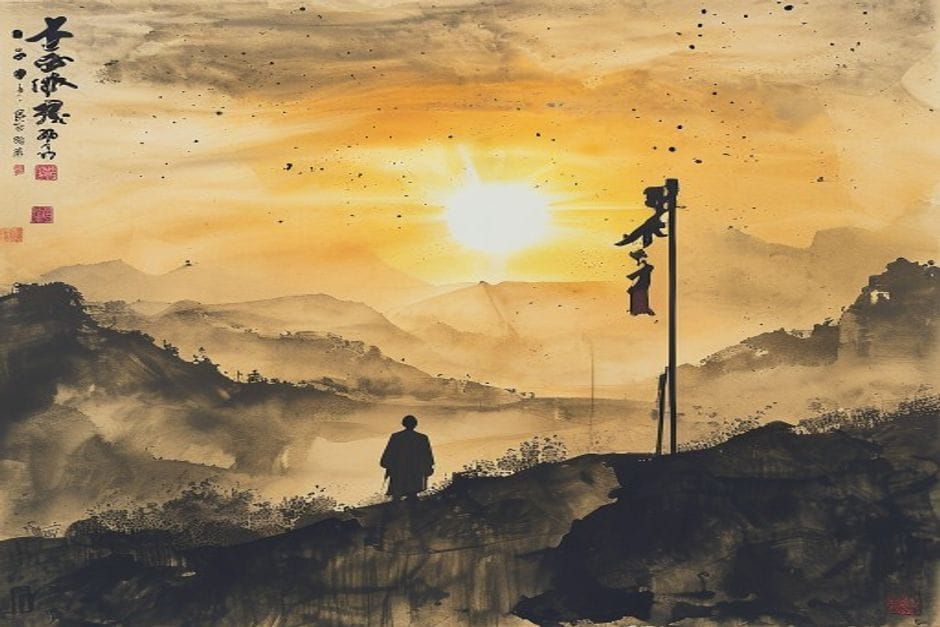
"I have spent years waiting for someone to give me permission to lead — until the day I realized I was the one holding the flag."
There is an old idea in Sun Tzu's Art of War — a short line that most people skim right past because it sounds like a list of military virtues. It says that a general must possess five qualities: wisdom, trust, humanity, courage, and discipline. 將者智信仁勇嚴. Five words. Five attributes that defined what it meant to command an army two thousand years ago.
But here's what strikes me every time I return to that line: Sun Tzu wasn't describing a military rank. He was describing a state of being. He was saying that the person who leads — who truly leads — is not simply someone given authority from outside. It is someone who has cultivated something inside. And in the most personal application of this ancient text, the army you are responsible for commanding is your own life: your choices, your attention, your days, your becoming.
Most of us don't think of ourselves as generals. We think of ourselves as people trying to get through the week. But what if the quality of your week — your year, your decade — is determined by whether you are showing up as the general of your own life, or whether you've quietly handed that role to someone else?
The flag in ancient Chinese warfare was not decorative. It was a signal, a focal point, a declaration of presence and direction. Soldiers oriented themselves by it. When the flag moved, the army moved. When the flag fell, confusion followed. The general's flag — 將旗 — was the visible expression of invisible authority. It said: I am here. I know where we are going. Follow this.
We each carry something like that flag — whether we know it or not. The question is whether we've chosen to plant it somewhere intentional, or whether it's been quietly taken over by other forces: other people's expectations, old fears, the relentless noise of comparison. This article is about learning to take your flag back. Not to dominate anyone else, but to stop being a refugee in your own life.
(a) The General's Flag: Five Qualities That Make You the Commander of Your Own Life
Sun Tzu's five virtues — 將者智信仁勇嚴 — are usually translated as: wisdom, trustworthiness, benevolence, courage, and discipline. When applied to the military context, they describe a leader who is strategically intelligent, reliable to their troops, genuinely caring, unafraid to act, and consistent enough to be followed. Remove the battlefield. Keep the framework. What remains is one of the most practical models for personal leadership I've ever encountered.
Wisdom (智) is not cleverness. It is the habit of stepping back far enough to see the full picture before reacting. The general who sees the terrain clearly does not waste soldiers on hills that don't matter. In your own life, wisdom is the practice of asking: Is this really the problem I should be solving? Before you pour more hours into a job that isn't working, before you spend another year trying to fix a relationship that was never healthy — wisdom asks the slower, harder question.
Trust (信) here means something specific: the ability to keep your word to yourself. This is perhaps the most quietly devastating failure of modern self-leadership. We set intentions and abandon them without ceremony. We make plans and quietly shelve them. Every time you tell yourself you'll do something and don't, you erode your own authority. Trust — real trust — is rebuilt through small, kept promises. Not grand resolutions, but tiny consistent acts that teach your inner self: this person follows through.
Humanity (仁) is the general who does not spend lives carelessly. Translated inward: it is the quality of not being brutal with yourself. High standards and self-cruelty are not the same thing. The best general holds the army to rigorous expectations and genuinely cares for the people within it. You can pursue excellence and still treat yourself with warmth. In fact, you must — because the general who exhausts and degrades their troops will eventually have no army left to lead.
Courage (勇) is not the absence of fear. Sun Tzu's generals felt fear. Courage is the decision to act in the direction of your real values even when the outcome is uncertain. It shows up in smaller moments than we expect: speaking honestly in a conversation that matters, leaving the meeting that's wasting your year, starting the work you've been postponing for the precise reason that it matters too much to risk failing at.
Discipline (嚴) closes the loop. Without structure, the other four qualities dissolve into good intentions. Discipline is the container that makes wisdom actionable, trust demonstrable, humanity sustainable, and courage repeatable. It is not harshness — it is the recognition that your freedom is built on scaffolding, and that scaffolding requires maintenance.
(b) Why Self-Leadership Fades or Fails
- We confuse busyness with command. When you are relentlessly occupied, it's easy to feel like you're running something. But a general who spends all their time responding to fires never gets to direct the campaign. Busyness can be a form of hiding — it feels like effort, it looks like effort, and it allows us to avoid the harder, quieter work of deciding what we actually want and choosing to pursue it. The inbox is always full. The notifications never stop. The person who has built a life they meant to build has learned to put the flag down somewhere specific and guard that ground fiercely.
- We outsource our standards to others. Many people carry standards that were handed to them before they were old enough to choose: a parent's definition of success, a culture's definition of a good life, a company's metric of worth. There is nothing wrong with inheriting values. The failure comes when we never audit them — when we spend forty years climbing a ladder and never once asked whether we leaned it against the right wall. Real leadership begins with a moment of honest self-inventory: Do I actually want this? Or do I want to have wanted it?
- We treat self-care and self-discipline as opposites. When we burn out, we rest — and call that recovery. When we recover, we push — and call that growth. What we rarely do is build a life where both exist simultaneously, where the structure supports the softness and the softness sustains the structure. When the only mode we have is hard-driving, we eventually crash. When the only mode is gentle self-care, we drift. The general who masters both — holding the army to account and genuinely tending to it — is the one who can sustain a long campaign.
(c) Three-Step "Commander's Method": Know Yourself → Keep Your Word → Hold the Structure
- Know Yourself — The first move of any capable general is to assess the terrain, their resources, and the enemy's position. Before you can lead your life, you need an honest inventory of where you actually are. Not where you wish you were. Not where you think you should be by now. Where you actually are. This means sitting with some uncomfortable questions: What do I genuinely want, underneath the noise of what I think I should want? Where am I spending energy on goals that are no longer mine? What do I keep saying I'll do but never do — and what does that silence tell me?
The practice here is not lengthy therapy or endless journaling. It's a weekly habit of ten quiet minutes with a single question. Try this one: "If I were advising my best friend who had my exact life, what would I tell them to stop doing immediately?" The distance of that reframe often produces startling clarity. Write down what comes up. Do not immediately act on it. Let it sit for two days and see if it holds. - Keep Your Word — The second virtue, trust (信), is rebuilt through micro-commitments. Not the sweeping declarations we make at midnight in January — those rarely survive contact with February. Instead: choose one small thing you will do today that you would otherwise skip. Not a thing that takes hours. A thing that takes fifteen minutes. Then do it. Then tomorrow, choose again.
The mechanism here is not productivity — it is identity. Each kept promise is a vote cast for a version of yourself that can be counted on. Over weeks, those votes accumulate into a new self-story: I am someone who follows through. That story, once genuinely believed, changes everything downstream. As one person put it during a coaching session: "I stopped making promises to myself that sounded impressive and started making ones I knew I could keep. Six months later, I was doing more than I ever had before — and none of it felt forced." - Hold the Structure — Discipline (嚴) does not mean rigidity. The general who refuses to adapt to changing terrain will lose. But there is a difference between intelligent adaptation and drifting without anchor. Holding the structure means choosing, in advance, the non-negotiable containers of your life and defending them with quiet consistency. These might be: a morning hour before the world makes demands, a weekly review where you ask whether your actions matched your values, a clear stopping time so the work doesn't devour the rest of life.
The key insight is this: structure creates freedom, not the other way around. The musician who practices scales every morning for thirty minutes doesn't feel constrained by that practice — they feel free to improvise because the fundamentals are solid. Build your structure around what matters most to you, then protect it the way a general protects the supply lines: without drama, but without compromise.
(d) Four-Week "General's Training" Plan
| Week | Focus | Daily Practice |
|---|---|---|
| Week 1 | Wisdom — See the terrain clearly | Each evening, write one sentence: "The most important thing I actually did today was ___." Notice the gap between what felt urgent and what was genuinely meaningful. |
| Week 2 | Trust — Rebuild your word to yourself | Choose one small daily commitment (10–15 minutes). Do it without fail. At week's end, notice what that consistency has done to how you feel about yourself. |
| Week 3 | Courage + Humanity — Act and be kind | Identify one thing you've been avoiding that matters. Take one small step toward it. Then, at day's end, write one thing you did well — not to boast, but to notice. |
| Week 4 | Discipline — Build the container | Design three "protected zones" in your week: one for deep work, one for rest, one for reflection. Hold them. When disrupted, return without self-judgment. |
After four weeks, you won't have transformed into a different person. But you will have planted your flag somewhere specific — and you'll know what it feels like to stand under it. That feeling is the beginning. The general doesn't win the campaign in the first week; they build the conditions in which winning becomes possible. What you're building here is not a burst of motivation. It is a relationship with yourself that can sustain direction over time — through fog, through resistance, through the ordinary Tuesday mornings when nothing is dramatic and everything depends on what you quietly choose to do anyway.
Self-connection Mini Practice
- If you were a general commanding your own life — not a soldier following orders, not a bystander watching from outside — what is one order you would give yourself this week? Write it as a command, not a wish.
- Which of the five virtues (wisdom, trust, humanity, courage, discipline) feels most present in your life right now? Which one feels most quietly absent — and what might its absence be costing you?
- Think of a decision you've been postponing. Not because you don't know the answer, but because you've been waiting for something outside yourself to give you permission. What would it look like to grant yourself that permission today?
The flag is not waiting for you to earn it. It's not a reward for becoming someone more impressive, more certain, more finished. It was always yours to plant. The only question was whether you would choose to pick it up. Sun Tzu wrote about generals on battlefields, but what he was really describing is the quality of inner life that makes a person capable of direction — not just reaction, not just endurance, but genuine navigation. That navigation is available to you right now, in the life you already have, with the resources you already carry. You don't need perfect conditions to lead. You need the decision to start. Plant the flag. The army — your attention, your energy, your days — will orient around it.
If you're open to more reflections and ancient wisdom on becoming the author of your own story: 👉 Tap here to explore more about leadership & self-mastery. When you stop waiting for the world to appoint you — you don't just lead better — you finally begin to live on purpose.
Frequently Asked Questions
What does Sun Tzu's 將者智信仁勇嚴 mean for everyday life?
Sun Tzu's five virtues — wisdom, trust, humanity, courage, and discipline — were originally a framework for military commanders, but they map with surprising precision onto personal leadership. Wisdom is asking the right questions before acting. Trust is keeping your word to yourself. Humanity is pursuing excellence without cruelty. Courage is acting toward your values despite uncertainty. Discipline is building the structure that makes all four sustainable. Together, they describe not a rank but a state of being available to anyone willing to cultivate it.
How do I know if I've quietly handed over leadership of my own life?
The clearest signs are a persistent gap between what you say you want and what your days actually reflect, a sense of being very busy without a feeling of direction, and goals that, on honest inspection, belong to someone else's definition of a good life. If you find yourself needing external permission to make decisions about your own path — waiting for approval, validation, or the right moment to arrive — that is the flag being held by someone, or something, other than you. The recognition itself is the beginning of reclaiming it.
What is the difference between self-discipline and self-cruelty?
Self-discipline is the structure that makes your real values actionable over time. Self-cruelty is the habit of treating every imperfection as evidence of fundamental inadequacy. The difference shows up in how you respond when you fall short. A disciplined person notices the gap, adjusts, and continues without extended self-punishment. A self-cruel person uses failure as confirmation of a story about being fundamentally not enough. Sun Tzu's virtue of humanity (仁) applies inward: you can hold yourself to high standards and still treat the person meeting those standards with genuine care.
Why do self-improvement intentions keep failing, and how can this change?
Most intentions fail because they are set at the wrong scale and in the wrong direction. We make sweeping resolutions that require a different version of ourselves to execute, then feel defeated when the current version cannot sustain them. The trust-rebuilding practice in this framework works differently: it begins with commitments small enough to be kept, which builds the identity evidence that larger change requires. Each kept promise is a vote for the person you are becoming. Identity shifts downstream from behavior — not the other way around.
How long does it take to genuinely develop self-leadership?
The four-week plan in this article is designed to produce one concrete shift: you will have practiced each of the five virtues in a structured way and have a felt sense of what it means to stand under your own flag. Deeper, more durable self-leadership — the kind that persists through setbacks and uncertain seasons — typically takes three to six months of consistent practice. The most important thing is not the timeline but the direction: every small, kept promise and every honest self-inventory is already the practice. There is no threshold you must cross before it begins to count.