Wisdom of the Empty Cup - How Openness Becomes Your Greatest Resource
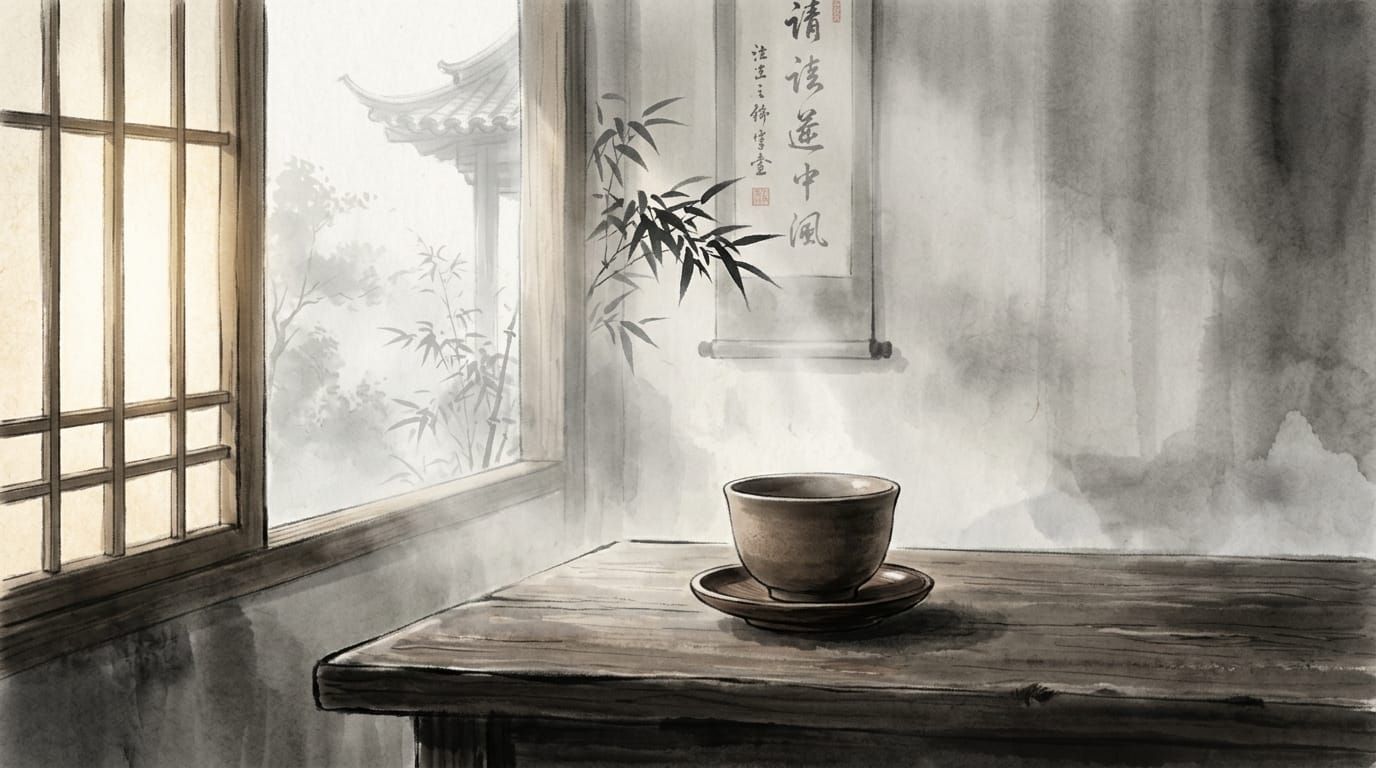
"The day I stopped trying to be the one who already knew was the day I finally started learning something real."
There is a kind of person we have all met — perhaps we have been this person — who listens to new information while quietly composing their rebuttal. Who enters a conversation already holding their conclusion. Who reads a book and extracts only the passages that confirm what they already believe, filing the rest as irrelevant or mistaken. This person is not unintelligent. Often they are quite brilliant. But they are working from a full cup, and a full cup cannot receive anything new. Whatever you pour into it simply spills over the sides.
We tend to celebrate fullness. A person with opinions is confident. A person with a track record is trustworthy. A person with a clear worldview seems grounded. And these things are genuinely valuable — experience matters, expertise matters, having a point of view is not a weakness. But there is a shadow side to accumulated knowing that we rarely talk about honestly: the way it can calcify into a kind of armour that keeps new wisdom out as efficiently as it keeps old certainty in. The full cup does not know it is full. That is the problem.
Sun Tzu's principle 因糧於敵 (yīn liáng yú dí) — "draw provisions from the enemy" — was originally military advice about supply lines. An army that carries all its own food becomes slower, more vulnerable, more dependent on an unbroken chain that can be cut. But the army that learns to live off the landscape it moves through — that sees every environment as a potential resource — stays light, adaptive, and alive to possibility. Two and a half thousand years later, this insight reaches far beyond the battlefield. It describes something fundamental about how creative, growing, genuinely alive human beings relate to the world around them.
The empty cup is not a passive thing. This is important to understand. Emptiness, in this context, is not the blankness of ignorance or the hollow indifference of someone who simply has not formed views yet. It is a cultivated capacity — the practiced ability to set aside what you already know long enough to genuinely receive what is in front of you. It is the Zen master's "beginner's mind": the recognition that even an expert, perhaps especially an expert, benefits from approaching the familiar as though encountering it for the first time.
This capacity is the source of what the most interesting thinkers, creators, and makers share in common. They are voracious consumers of things outside their domain. The novelist who reads obsessively about mycology. The architect who studies medieval Islamic tilework. The software engineer who keeps a sketchbook of botanical illustrations. These are not mere hobbies. They are the practice of keeping the cup available — of drawing provisions from unexpected terrain, of allowing the world's richness to become the raw material for something new. The insight you need for the problem you are stuck on is rarely hiding inside the problem itself. It is almost always waiting somewhere you haven't thought to look yet.
(a) The Empty Cup: What Openness Actually Requires
The Chinese phrase 因糧於敵 carries within it a subtle but crucial implication: the army must be willing to eat what the land provides, not just what feels familiar. This is harder than it sounds. Most of us have strong preferences about the kind of input we allow to influence us. We follow thinkers who think like us. We read in our genre. We attend conferences where everyone is working on roughly the same set of problems. We consume information that confirms our existing frameworks and call it research.
Real openness requires something more uncomfortable. It requires genuine curiosity about things that do not immediately seem relevant. It requires sitting with perspectives that contradict your own without immediately reaching for a counterargument. It requires, occasionally, being genuinely changed by something you encountered — walking away from a conversation, a book, a walk through an unfamiliar neighborhood, and finding that some belief or assumption has quietly shifted.
This is not weakness. In Sun Tzu's terms, it is strategic intelligence. The general who insists on eating only what he brought from home will eventually run out of provisions. The general who learns to read the landscape, identify what is available, and adapt accordingly will always have resources. And this is exactly the creative and intellectual situation we find ourselves in every time we work on something that matters: the resources we need are out there, in the world, waiting to be recognized — but only if we arrive somewhere with sufficient room to receive them.
The empty cup is not emptied once and then left that way. It requires regular emptying. Every conversation, every book, every project deposits something in us — assumptions, conclusions, habitual framings. The practice of emptying is the practice of periodically examining those deposits and asking: is this still serving me? Is this genuinely true, or just familiar? What am I not seeing because I am so sure I already see it?
(b) Why a Full Cup Fades or Fails
- It stops generating genuine novelty. Creative work, at its core, is the act of combining things in ways that have not been combined before. If all your inputs come from the same domain — if every chef you follow is working in the same culinary tradition, if every designer you study works in the same visual language, if every writer you read shares your sensibility — then your combinations will have a ceiling. You will get better within a narrow range and stop expanding beyond it. The most striking creative breakthroughs almost always come from unexpected collisions: a biologist who understands music theory, an economist who thinks in metaphors borrowed from ecology, a graphic designer who once studied classical calligraphy. The full cup, sealed by certainty and habit, cannot produce these collisions. It can only refine what it already contains.
- It mistakes familiarity for mastery. There is a particular cognitive trap that affects people who have worked hard to develop expertise: the feeling of fluency begins to substitute for the reality of understanding. You have seen this problem before. You know what it looks like. You know what the solution is. And sometimes you are right — experience is genuinely valuable. But sometimes the situation is subtly different from the last one, and your pattern-matching, so fast and confident, fills in the gap with what was true before rather than looking closely at what is true now. The result is not mastery — it is autopilot wearing mastery's clothing. A genuine beginner, approaching the same problem without your background, might see it more accurately precisely because they have no framework to impose on it.
- It creates fragility instead of resilience. When an army carries all its own provisions, a single disrupted supply line can end the campaign. When a creative or intellectual life depends entirely on its own previously accumulated resources, a single disruption — a career change, a creative block, a shift in the field — can feel catastrophic. When you stay open, drawing provisions from the surrounding world, you are never fully dependent on any single source. A new context becomes an opportunity rather than a threat. When your industry changes, you have been learning from adjacent industries for years and arrive with transferable insight. When your creative process stalls, you have a hundred unexpected places to look for new fuel. The empty cup is not vulnerable — it is antifragile.
(c) Three-Step "Empty Cup Method": Clear → Receive → Transform
- Clear (Create genuine space) — Before you can draw provisions from the world, you have to create the space to receive them. This begins with an honest inventory of what is currently filling your cup. What are your default sources of information? What are the ideas you return to most often — not because you are still learning from them, but because they are comfortable? What domains have you declared "not for me" without actually investigating them? Clearing does not mean discarding everything you know; it means loosening your grip on it. It means choosing, periodically, to spend time in terrain that is unfamiliar — a book from a completely different field, a conversation with someone whose life has taken a very different shape from yours, a walk in a neighborhood you have never visited. The clearing can be as simple as sitting with a blank notebook and writing the question: What am I certain about that I have not questioned in a long time? "I realized I had been reading the same four authors on rotation for three years," one writer reflected. "The day I deliberately picked up a book about the physics of materials, everything I was working on started to move again."
- Receive (Practice genuine attention) — The second step is subtler and harder than it sounds: when you encounter something new, actually receive it. This means resisting the impulse to immediately categorize, judge, or apply. It means staying with something — a strange idea, an unfamiliar perspective, a piece of music that does not immediately make sense to you — long enough to let it become something more than a brief stimulus. Many of us move through potential inputs at such speed that nothing lands deeply enough to become genuinely useful. We read an article, agree or disagree, close the tab, and move on. We attend a talk, find it interesting, and immediately forget the three most provocative things the speaker said. Receiving requires slowness, or at least a quality of attention that feels slow even when it is not. It requires the willingness to ask: what is this actually saying? What would it mean if this were true? What does this change about how I see things? "I started keeping a quote journal," says a product manager who works in technology, "not of things I agreed with, but of things that made me uncomfortable or confused. Six months later, it became the best thinking resource I had."
- Transform (Make the borrowed yours) — The final step is where the military metaphor becomes most vivid: the army does not just find food in the landscape — it cooks it, incorporates it, converts it into the energy that sustains the march. You do not simply collect interesting inputs; you process them, connect them, let them react with what you already know, and produce something that could not have existed without both. This is the creative act itself: the transformation of received material into something new. It happens in the synthesis — when the thing you read last week collides with the problem you are working on today, and you suddenly see a connection nobody pointed out to you. It happens in the making — when you sit down to write or design or build and find that the strange book you read on your vacation has quietly become part of how you think. The transformation cannot be forced. But it can be prepared for by keeping the cup available and receiving fully. "I wrote my best essay by accident," a journalist once described. "I had been reading about the migration patterns of arctic terns for no particular reason. Three months later, that was the metaphor that unlocked everything I had been trying to say about long-distance relationships."
(d) Four-Week "Open Provisions" Plan
| Week | Focus | Daily Practice |
|---|---|---|
| Week 1 | Map your current cup | List the five sources of information or inspiration you return to most often. Identify one assumption in your work or creative life that you have not genuinely questioned in over a year. Sit with the question: what am I not seeing? |
| Week 2 | Deliberately cross a border | Each day, spend 20 minutes with something completely outside your usual domain — a different genre, discipline, or medium. No agenda, no immediate application. Just receive it with your full attention and note one thing that surprised you. |
| Week 3 | Deepen the reception | Choose one unexpected input from Week 2 that sparked something in you. Go deeper: read more, talk to someone who knows the field, explore the edges. Keep a journal of connections between this new territory and your own work. |
| Week 4 | Transform into something made | Create something — a written reflection, a sketch, a plan, a conversation — that deliberately incorporates an insight or metaphor drawn from outside your domain. Notice how the "foreign" provision changes the flavor and quality of what you make. |
The beautiful irony of the empty cup practice is that it makes you more yourself, not less. The fear is that openness will dilute you — that if you let too much in, you will lose your voice, your identity, your distinctive way of working. The opposite tends to be true. When a river has many tributaries, it does not become confused — it becomes stronger, deeper, more capable of sustaining life along its banks. Your voice is not threatened by new inputs; it is enriched by them. The people whose work feels most alive, most distinctively theirs, are almost always the ones who have been drawing most generously from the world around them — not copying it, but composting it, allowing it to feed the soil from which their own particular garden grows.
Self-connection Mini Practice
- In what area of your life have you been operating from a very full cup — so certain of how things work that you have stopped genuinely questioning your assumptions? What might you discover if you approached that area with genuine beginner's curiosity for one week?
- Think of someone whose life or work looks very different from yours — someone you might not naturally spend time with. What might you learn from spending one hour in genuine conversation with them, asking questions rather than offering perspectives?
- What is a domain completely outside your usual world — a craft, a science, a cultural tradition, an art form — that you have always felt a faint pull toward but dismissed as irrelevant? What if that pull was pointing toward exactly the resource you are currently missing?
The cup that can be filled is the cup that is useful. The general who can live off the land is the general who survives. The mind that stays genuinely open — not endlessly uncertain, but regularly emptied, regularly replenished — is the mind that keeps growing long after the minds of equally talented people have stopped. You do not need more expertise in what you already know. You need the courage to arrive somewhere new with your hands open, ready to receive what the landscape is offering. The provisions are already there, all around you. The only question is whether your cup has room to hold them. Empty it a little. See what flows in. What arrives might be exactly what you have been working so hard to find.
If you're open to more reflections and ancient wisdom on creativity and openness: 👉 Tap here to explore more about curiosity & growth. When you stay genuinely open — you don't just think better — you become more fully alive.
Frequently Asked Questions
What is "beginner's mind" and how is it different from being a beginner?
Beginner's mind — the Zen concept of shoshin — is not about lacking knowledge; it's about how you hold the knowledge you have. A beginner lacks experience. Someone practicing beginner's mind may have deep expertise, but they deliberately approach situations with openness and curiosity rather than assumption and conclusion. They ask questions a beginner would ask even when they already know the answer — because fresh questions sometimes reveal gaps that familiarity has hidden. The paradox is that cultivating beginner's mind often makes experienced practitioners more effective, not less, because they continue seeing genuinely rather than pattern-matching reflexively onto what they expect to find.
How do I practice emptying my cup without losing the expertise I've worked hard to build?
The practice of emptying is not about erasing your knowledge — it's about loosening your grip on it. You do not need to pretend you have no experience; you need to hold your experience as provisional rather than absolute. A useful daily exercise: before entering any meeting, conversation, or creative session, take thirty seconds to consciously ask, "What might I discover here that contradicts what I expect?" That small act of deliberate curiosity shifts your posture from confirming to receiving — without discarding your background at all. Your expertise becomes more useful, not less, when it is held with enough lightness to update when new evidence arrives.
Is consuming content outside my field actually productive, or is it just distraction?
The distinction is quality of attention, not domain. Scrolling social media in your own field is distraction. Reading deeply about mycology, architecture, or medieval history with genuine curiosity is productive even if it seems irrelevant — because cross-domain insight is where the most original thinking tends to emerge. The novelist who reads about bird migration and the engineer who studies classical music theory are not procrastinating; they are provisioning the creative army. The key is depth of engagement. Skimming ten articles outside your domain yields little. Spending an hour genuinely absorbed in one unfamiliar field can yield connections that serve you for years.
What does Sun Tzu's 因糧於敵 have to do with creativity and learning?
Sun Tzu's military principle — that an army dependent on its own supply lines becomes slow and vulnerable, while an army that learns to draw provisions from the surrounding terrain stays agile and resourced — maps directly onto how creative and intellectual lives work. The person who only draws inspiration from their own domain, only confirms ideas they already hold, only consults sources that agree with their existing view, is the army that carries all its own food. When those supplies run out — when a creative block hits, when a field changes, when an approach stops working — they have nothing to fall back on. The person who stays genuinely open, drawing from unexpected terrain, is always provisioned for the next challenge.
How do I know when I have genuinely transformed received material versus just borrowed it?
The test is whether the new input has changed how you think, not just what you know. Borrowing is when you repeat an idea from another domain and everyone can see where it came from. Transformation is when the input has reacted with your existing knowledge to produce something that could not have existed without both — and the seam is no longer visible. A practical indicator: if you can clearly cite the source and explain the metaphor, you're at the borrowing stage. If the foreign idea has become so integrated into your thinking that you naturally express it in your own language without consciously tracing it back, transformation has happened. Both are valuable; transformation is rarer and deeper.