Who Holds the Reins -Reclaiming Control of Your Time and Attention
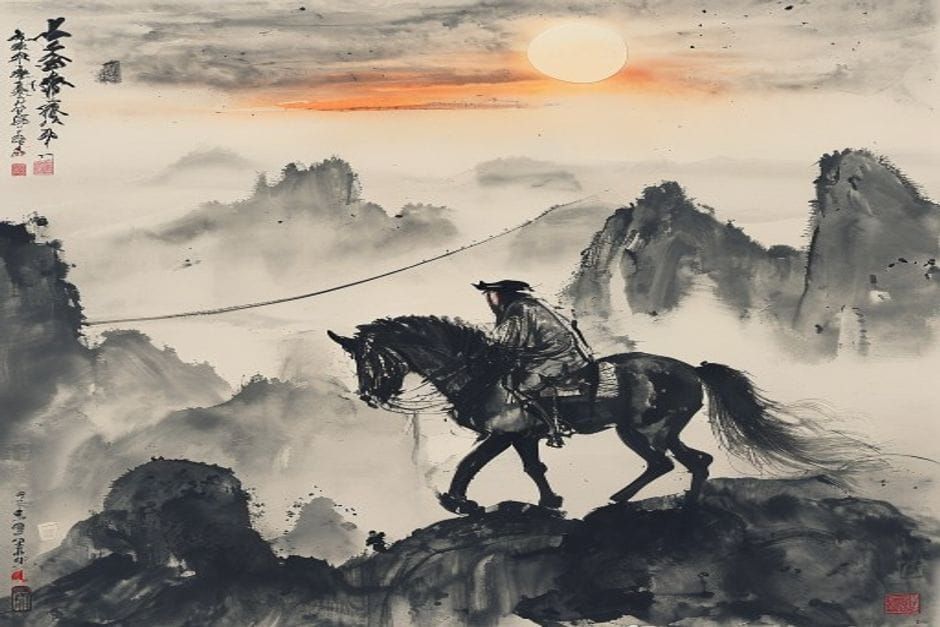
"I used to hand the reins to everyone who asked — my phone, my calendar, my colleagues — and wonder why I always arrived somewhere I never meant to go."
There is a particular exhaustion that has nothing to do with how much you slept. You wake up already behind. Your attention is borrowed before you've had a single thought of your own. By midday you've responded to seventeen requests, sat through two meetings that could have been a paragraph, and scrolled past so many opinions that you've forgotten what yours is. By evening, the feeling isn't tiredness — it's something closer to displacement. You were somewhere today, but you were not quite there. Someone else was steering, and you were just along for the ride.
This is what Sun Tzu described as the worst position in any contest: to be moved by others rather than to move them. Not through cruelty or dominance, but through something simpler — through having a clear center of gravity that others must orbit, rather than being pulled into everyone else's orbit. The Chinese phrase is 致人而不致於人: bring others to you, don't be brought to them. It is a principle of presence, of agency, of knowing where you stand and choosing — deliberately — where you go next.
Think of a pair of reins. In the right hands, they are not instruments of force. They are a conversation between rider and horse, a constant quiet negotiation. The rider who grips too hard exhausts both parties. The rider who lets go entirely goes nowhere useful. The art is in the contact — firm enough to communicate, loose enough to respond. Your time and attention work the same way. Too rigid and you become brittle, unable to move with life's natural changes. Too loose and you become reactive, carried wherever the current is strongest. The reins are not about control for its own sake. They are about remaining the author of your own direction, even as the terrain shifts under you.
(a) The Reins: What Personal Autonomy Actually Means
Autonomy is one of those words that sounds grand until you try to locate it in your actual day. Most people, when asked if they feel in control of their time, will hesitate. They'll say something like "mostly" or "when things are quiet" — which means, essentially, never. Because things are rarely quiet. The interruptions are structural. The demands are built into the architecture of modern work and communication.
Sun Tzu's concept of 致人而不致於人 (zhì rén ér bù zhì yú rén) was written for generals, but its insight applies to anyone who has ever lost an afternoon to other people's urgencies. The general who lets the enemy dictate the terms of battle has already half-lost. The person who lets their inbox dictate the shape of their day has already surrendered something precious — not time exactly, but the orientation of their thinking. Because attention is not just time. Attention is the lens through which you experience your own life. What you consistently pay attention to becomes, over time, who you are.
Personal autonomy, then, is not the fantasy of a completely unscheduled life. It is something more practical and more interior: the practice of knowing your own priorities well enough that when a demand arrives — and demands always arrive — you can place it consciously rather than react to it reflexively. The rider doesn't refuse all terrain. The rider chooses the path.
This is the quiet revolution that changes everything without looking dramatic from the outside. You don't quit your job. You don't become a hermit. You simply begin to notice: who set this agenda? Was it me? And if it wasn't — does it still deserve my full presence?
(b) Why Personal Autonomy Fades or Fails
- The urgency trap. Most of what feels urgent is not important, and most of what is important rarely feels urgent — at least not at first. A text notification triggers a small jolt of anxiety that masquerades as priority. A colleague who needs something "by end of day" creates a sense of emergency that overrides whatever you'd planned to focus on. Over time, we train ourselves to respond to urgency signals as though they were all equally valid. The result is a life spent putting out small fires while the larger projects — the ones that actually matter to us — wait patiently in the background until they disappear. Urgency is a feeling, not a fact. And confusing the two is how we hand the reins to others without meaning to.
- The approval architecture. We live inside systems — workplaces, families, social feeds — that are quietly optimized to route our attention toward what other people want from us. Notifications are designed to feel personal. Open offices are designed to make you visible, which means interruptible. Social media shows you what got the most reaction, nudging you to produce more of the same. None of this is malicious; most of it isn't even intentional. But the cumulative effect is that many people have unconsciously built an identity around being responsive, being available, being good at reacting quickly — and have slowly lost touch with the capacity to initiate. To begin something from their own quiet center.
- The identity confusion. Perhaps the deepest reason autonomy fades is that many of us have spent so long being shaped by others' expectations that we've lost clarity on what we actually want. When someone asks "what would you do with a completely free afternoon?" the answer is genuinely difficult — not because the options are few, but because we haven't exercised that muscle in so long that it has atrophied. When you're always being steered, you forget what it feels like to steer. When you always arrive at a destination someone else chose, you lose the ability to imagine your own. The reins have been out of your hands for so long you've stopped noticing they were ever yours.
(c) Three-Step "Reclaim" Method: Locate → Protect → Initiate
- Locate Your Center — Before you can hold the reins, you need to know what you're actually steering toward. This is not a goal-setting exercise in the conventional sense. It is more like taking a long, honest inventory. What are the two or three things that, when you spend real time on them, leave you feeling more yourself rather than less? Not what should matter. Not what you've been told matters. What actually matters — to you, in your body, in the texture of your days? This requires sitting with some discomfort, because many of us have been running from the question for years. Start small. At the end of each day for one week, write down one moment when you felt genuinely present and engaged, and one moment when you felt most absent or mechanical. The pattern that emerges is not a judgment — it is a map. "I started doing this on a Sunday evening and by Thursday I realized I'd been fully present exactly twice — once while cooking, once during a long walk. Everything else was performance."
- Protect the Non-Negotiables — Once you've located what matters, the next step is not optimization — it is protection. This means choosing, in advance, what gets your freshest attention each day, and then treating that choice as seriously as a meeting with someone you deeply respect. Most people do the opposite: they give their sharpest hours to email and meetings, and squeeze their real work — the creative, the meaningful, the generative — into whatever is left. The principle of 致人而不致於人 applies here directly: put your priorities on the field first, so that other demands must arrange themselves around them rather than the reverse. This doesn't require long hours or dramatic restructuring. It often requires only one deliberate hour, held consistently, before the world starts asking things of you. "I blocked 7 to 8 every morning as 'unreachable.' My team thought I was in a standing meeting. I was writing. In six months I finished something I'd been meaning to start for three years."
- Initiate Before You React — This is the step that changes the day's texture most quickly. Before you check your phone, your email, or your messages, do one small act that comes entirely from you. It doesn't need to be grand. Write one sentence. Read one page. Sit with your coffee and think one actual thought through to its end. The point is not productivity — it is orientation. When you begin your day by reacting to others' input, you start in a posture of response; every choice that follows tends to be shaped by that frame. When you begin by initiating — even a tiny initiation — you start in a posture of authorship. The reins are in your hands from the first moment, and you carry that posture forward, however subtly, into the rest of the day. "My rule became: no phone until I've had one thought that was entirely mine. Some days it was just noticing the quality of light through the window. But it changed something fundamental about how the day felt."
(d) Four-Week "Reclaim the Reins" Plan
| Week | Focus | Daily Practice |
|---|---|---|
| Week 1 | Awareness — notice who's steering | At day's end, record: "Who or what directed most of my attention today?" No judgment, just observation. Keep a simple tally of reactive vs. self-directed hours. |
| Week 2 | Location — find your center | Each morning, before any input from outside, write one sentence: "What matters most to me today?" It doesn't need to be achievable. It just needs to be honest. Notice how this shifts your orientation. |
| Week 3 | Protection — hold one non-negotiable | Choose one 30–60 minute window that belongs entirely to your priority. Block it, guard it, begin it without announcement. Practice beginning without waiting for permission or the perfect moment. |
| Week 4 | Initiation — lead the day, don't follow it | Before any screen, any message, any outside input — do one self-initiated act. However small. This is your daily declaration of authorship. Track how the day feels different when it begins from you. |
By the end of four weeks, you will not have reorganized your entire life. But you will have done something more important: you will have practiced the posture of holding your own reins. And practice, repeated enough times, becomes nature. The general who knows this doesn't need to win every skirmish — they need only to keep choosing the ground they stand on. Over time, that consistency compounds into something others can only describe as self-possession. The world still makes its demands. Your phone still buzzes. Meetings still appear. But the relationship between those things and your inner life has quietly shifted. You are no longer surprised to find yourself somewhere you didn't choose. You chose.
Self-connection Mini Practice
- Think of the last time you felt genuinely in flow — absorbed, present, unselfconscious. What were you doing, and who had set that activity in motion? Was it you, or someone or something else?
- If you looked at yesterday's calendar and marked each hour as either "I chose this" or "this chose me" — what would the ratio look like? How does that ratio make you feel?
- What is one thing you've been meaning to begin — a project, a practice, a conversation with yourself — that keeps getting displaced by the immediate? What would change if you protected thirty minutes for it tomorrow morning, before anything else arrived?
The reins were always yours. That is the strange and ordinary truth of it. No one took them from you in one dramatic moment — they were borrowed in installments, a small surrender here, a yes-when-you-meant-no there, a morning handed over before you had fully woken up. And they can be reclaimed the same way: in installments, quietly, without announcement. Not through resistance but through return. You return to your own priorities, your own rhythms, your own sense of what this day is actually for. You don't need to fight the world to hold the reins. You only need to stop letting go of them without noticing. Hold them loosely. Hold them with care. But hold them.
If you're open to more reflections and ancient wisdom on living with intention and clarity: 👉 Tap here to explore more about autonomy & presence. When you choose how your attention moves — you don't just change your schedule — you change who you're becoming.
Frequently Asked Questions
What does Sun Tzu's principle 致人而不致於人 mean for everyday self-discipline?
致人而不致於人 translates as "bring others to you — don't be brought to them." For Sun Tzu it was military strategy; for modern life, it is a principle of personal agency. It means structuring your day so that your own priorities appear on the field first, and external demands must arrange themselves around them — rather than the reverse. The person who begins every morning reacting to others' urgencies has already, in Sun Tzu's terms, ceded ground. Self-discipline, in this reading, is not about willpower. It is about the structural decision to lead your own attention before anyone else claims it.
Why does personal autonomy feel so hard to maintain in modern work life?
Modern work environments are structurally optimized to route your attention toward others' needs. Notifications mimic personal urgency. Open offices make you visible and therefore interruptible. Social and collaboration tools reward fast response. None of this is malicious — but the cumulative effect is that responsiveness becomes an identity, and initiation atrophies. The deeper issue is that constant reactivity gradually hollows out your sense of your own preferences. When you always arrive somewhere others chose, you slowly lose the ability to imagine where you would choose to go. Reclaiming autonomy requires noticing this structural pull — and deliberately building counter-habits.
How is the "urgency trap" different from genuine priority, and how do I tell them apart?
Urgency is a feeling; priority is a judgment. Most urgency signals — a buzzing phone, an end-of-day request, a message marked important — produce a jolt of anxiety that mimics importance. Genuine priority, by contrast, rarely announces itself loudly; it tends to wait patiently in the background while urgent-feeling tasks crowd the foreground. The practical test: if this demand disappeared right now, would anything truly irreversible happen? If the honest answer is no, it is urgency masquerading as priority. Developing this discernment takes practice — which is exactly why the four-week plan begins with a week of pure observation before any behavior change.
What does it actually look like to "initiate before you react" on a busy day?
Initiating before reacting means doing one self-chosen act — however small — before you open any external input. It doesn't need to be productive in a conventional sense. Write one sentence. Read one page. Sit with a cup of tea and follow one thought to its natural end. The purpose is not output — it is orientation. When you begin your day by responding to others' input, your entire cognitive posture is set to "reactive." When you begin by choosing something, even something tiny, you enter the day as an author rather than a respondent. That posture carries forward, subtly shaping the quality of every decision that follows.
Is holding the reins about saying no to everything, or is there a more nuanced approach?
Holding the reins well is not about refusal — it is about conscious placement. The image of the rider is instructive: a skilled rider doesn't refuse all terrain or cling to a single path. They maintain contact with the horse, read the ground, and choose the route — responsive to conditions, never merely swept along. Applied to time and attention, this means you engage fully with others' needs and the day's genuine demands, but from a position of prior commitment to your own ground. You are not less available; you are available from a different posture. The reins are loose enough to respond, firm enough that you always know who is steering.