The Direction of Wind — Where to Place Your Energy
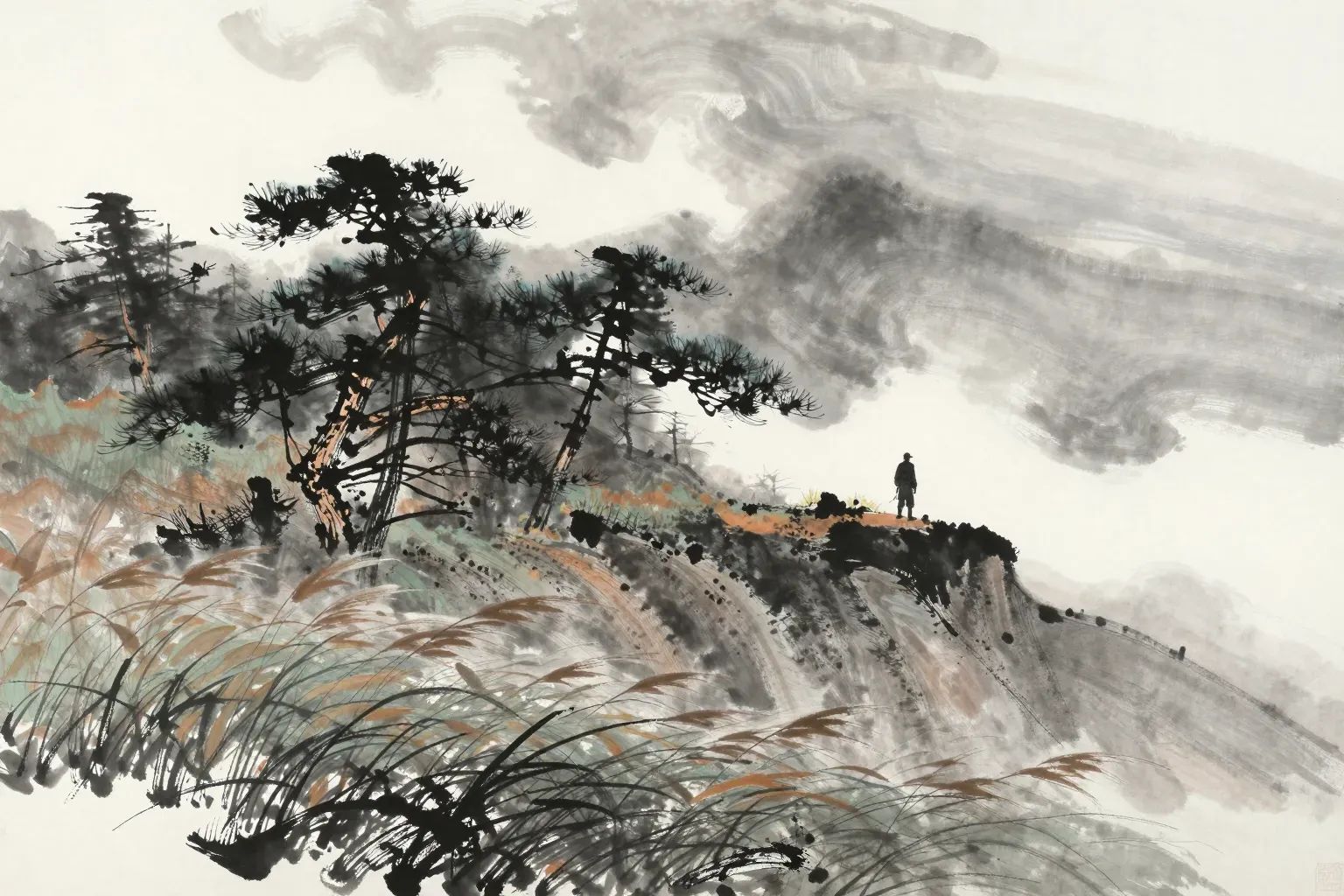
"I used to believe that doing more was the answer. Then I discovered that knowing where to aim was the question I had never thought to ask."
There is a passage in Sun Tzu's Art of War that most readers glance past too quickly: 避實擊虛 — avoid strength, attack weakness. For a general, the instruction is tactical: do not send your forces where the enemy is fortified; find the gap, find the unguarded flank, find the place where a small concentrated force can achieve what a large dispersed one cannot. But for those of us navigating the daily landscape of creative work, relationships, and personal growth, this principle contains something much more personal — and much more urgent. It is an instruction about attention itself. Where you place your energy determines almost everything else: the quality of your work, the depth of your relationships, the pace of your growth, the texture of your days. This article explores why most of us scatter our attention across far too many fronts; why focused energy is so much rarer and more powerful than people expect; and how a three-step Wind Method — drawn from this ancient tactical insight — can help you identify the one or two places where your energy will actually move something.
Watch wind move through a field of long grass. It does not touch every blade equally. It comes from a direction, and in that directionality it creates something visible — a ripple, a wave, a shape that moves across the surface of what it touches. The wind does not try to reach everywhere at once. It arrives from somewhere, moves toward somewhere, and because of that singular orientation, you can see it. Now imagine wind with no direction — a still day, air pressure distributed evenly in every direction at once. Nothing moves. Nothing is visible. The air is present but without effect. Attention works exactly the same way. Spread across a dozen half-commitments, it generates the same stillness as windless air. Gathered and aimed, it becomes a force that bends what it touches and leaves a visible mark. Sun Tzu understood this not as poetry but as mathematics: concentrated force at the right point beats dispersed force everywhere else.
(a) Wind: The Invisible Force That Shapes Everything
The principle of 避實擊虛 — avoid the fortified, seek the open — appears in Chapter Six of the Art of War, in a section about the use of emptiness and fullness, weakness and strength. Sun Tzu writes: 夫兵形象水,水之行避高而趨下,兵之形避實而擊虛 — "the form of soldiers is like water; just as water avoids high ground and flows to low ground, soldiers avoid strength and strike at weakness." The military logic is elegant: a smaller, agile force that consistently finds undefended gaps will outperform a larger force that attacks fortifications head-on, because fortifications are designed to neutralise superior numbers. Every unit of effort sent against a fortified position is effort that cannot be spent exploiting an open one.
In the territory of personal growth and creative work, the fortified positions are those areas of life and work where your energy meets the most resistance — not because you are wrong to care about them, but because the conditions are not yet right, the timing is off, or the structural advantage simply does not exist. The open ground — the 虛, the emptiness that Sun Tzu tells you to strike — is where your particular combination of skill, experience, and natural inclination meets the least friction and creates the most movement. This is not about avoiding hard work. It is about choosing which hard work is worth doing. Most people, when they assess their own fields, discover that the majority of their effort is concentrated on the fortified ground: fixing weaknesses rather than amplifying strengths; pursuing audiences or opportunities that resist them rather than leaning into the ones that pull them forward; spending hours on tasks they do adequately when they could be spending hours on tasks they do remarkably well. The wind knows which way it blows. The question is whether you do.
Focused attention is not just a productivity tactic. It is a form of self-knowledge. To know where your energy creates the most movement, you must first know your own particular shape — your genuine strengths, your honest limitations, the conditions under which you do your best work. And that knowledge, as Sun Tzu would recognise, is itself a form of intelligence about the terrain.
(b) Why Focused Energy Fades or Fails
- The illusion of coverage feels safer than the vulnerability of commitment. When we spread our attention across many things, we preserve optionality. If none of them work out, we haven't fully failed at any single one. If one of them works, we were always partly focused on it. This is not a conscious strategy — it is an emotional protection mechanism. Full commitment to one thing means full exposure to the possibility that the one thing doesn't work. Dispersal is the psychological hedge against that exposure. But here is the cost: the same dispersal that protects us from the full sting of failure also prevents us from achieving the full momentum that only concentrated effort produces. The wind that blows in all directions at once does not move anything. It is only when the wind commits to a direction that it becomes a force. And in most meaningful areas of life and work, concentrated effort over a sustained period produces results that dispersed effort over the same period simply cannot reach.
- We mistake activity for movement. There is a particular kind of busyness that looks remarkably like progress but produces very little of it. Answering every email as it arrives. Attending every optional meeting. Keeping every project slightly warm. Starting new things before finishing existing ones. These activities generate a continuous sense of being occupied — and being occupied feels responsible. It feels like showing up. But occupancy is not the same as progress, and the sensation of movement is not the same as actually getting somewhere. Sun Tzu's general does not attack every position on the map; he identifies the decisive point and concentrates there. The difference between a general who attacks everywhere and one who attacks the right place is not discipline or intelligence — it is the clarity to see which ground is open and the courage to leave the rest undefended.
- Our environment is designed to fragment attention, not focus it. The structural conditions of modern communication — notifications, feeds, open inboxes, the expectation of immediate availability — are all optimised for breadth, not depth. Every alert is a small argument that something else deserves your attention right now. Every new piece of content is a small suggestion that the thing you are currently doing might not be the most important thing. These interruptions do not feel like attacks on your focus because they arrive gently, even helpfully. But the cumulative effect is the same as a wind that constantly changes direction: nothing in the field bends. When attention is fragmented, even excellent effort produces mediocre results. When attention is gathered and sustained, even modest effort can produce extraordinary ones.
(c) Three-Step "Wind Method": Locate → Concentrate → Sustain
- Locate — Before you can direct your energy effectively, you must do the reconnaissance that Sun Tzu always insisted upon: map the terrain honestly. This means identifying, without self-flattery, where your effort currently produces the most movement per unit of investment, and where it meets walls of fortified resistance. Take stock of your commitments — professional and personal — and for each one, ask a simple question: when I invest an hour here, does it return more than an hour's worth of momentum? You are looking for the asymmetries. You are looking for the places where something about your particular combination of skill, timing, and positioning creates disproportionate results — the open ground, the unguarded flank. Equally, you are looking honestly at the fortified positions: the projects that have been difficult for too long, the efforts that consistently drain more than they produce, the goals you pursue because you think you should rather than because they genuinely pull you. The locate step is not comfortable. It often requires admitting that significant portions of your current effort are pointed at walls. "When I mapped it honestly, I found that eighty percent of my results came from maybe twenty percent of my activities. The rest was fortified ground I kept attacking out of habit."
- Concentrate — Once you have located the open ground, the next step is genuinely difficult: choose it, and let some of the fortified positions go unattended. This is not recklessness — it is the strategic allocation of a finite resource. Your attention is finite. Every hour you spend maintaining a commitment that produces little movement is an hour not available to concentrate on the ground that could produce a great deal. The concentrate step means making the hard choice to reduce breadth in service of depth. It might mean dropping a project, declining an opportunity, or restructuring your daily schedule so that your highest-quality attention — the hours when you are most sharp, most creative, most genuinely present — is protected for the work that most rewards that quality. This is where the Wind principle becomes personal: the wind that bends the grass is not the wind that tries to touch everything. It is the wind that comes from one direction with enough concentration to visibly move what it meets. "I stopped attending two recurring meetings and redirected those two hours to the one project that actually had momentum. Within three weeks, it had moved further than it had in the previous three months."
- Sustain — Concentration without duration produces the same result as wind that shifts direction every few minutes — a lot of activity, very little change in the landscape. The final step is staying aimed long enough for the concentrated effort to compound into visible results. This requires managing the discomfort of focus: the periodic sense that you are missing out on what is happening elsewhere; the moments when the fortified positions you have left unattended call for your attention; the plateaus where concentrated effort seems to produce nothing for a stretch before it suddenly produces a great deal. Sustaining focus is not a matter of pure willpower — it is a matter of environment design and honest expectation-setting. Build conditions that make sustained attention easier: clear boundaries around your best hours, a simple measure of whether you are spending time on the open ground or the fortified one, and a commitment short enough to feel achievable (ninety days, not forever). "I gave myself permission to focus on just one creative direction for three months. The hardest part was the second month, when nothing visible had happened yet. The third month made the whole experiment worth it."
(d) Four-Week "Find Your Wind" Plan
| Week | Focus | Daily Practice |
|---|---|---|
| Week 1 | Mapping — identify open ground and fortified positions | List every significant commitment (work, creative, relational) you carry. For each one, rate it: does investing time here produce more momentum than it costs, or less? Look for the honest answer, not the comfortable one. |
| Week 2 | Choosing — decide where the wind blows | From your Week 1 map, identify the one or two areas with the clearest open-ground advantage. Write a single sentence about each: "When I invest here, this is what moves." Then identify one fortified position you will stop attacking this week. |
| Week 3 | Protecting — guard your best attention | Block the first ninety minutes of your sharpest part of the day exclusively for open-ground work. No email, no messages, no adjacent tasks. Treat it as the most important appointment of the day, because it is. |
| Week 4 | Sustaining — build a ninety-day aim | Write one sentence naming what you will concentrate on for the next ninety days and why this ground is open. Read it each morning before you begin. Notice when you drift toward fortified positions and return without self-criticism. |
What happens to people who practice this Wind Method consistently is not an overnight transformation. It is something more like a gradual clarification — a slow emergence of shape from what had previously been an undifferentiated field of busyness. Work that mattered but never had enough attention begins to move. The projects that were always slightly stuck, always waiting for a window of time that never quite arrived, begin to have a different texture. Relationships that deserved depth begin to receive it. The creative ambitions that lived in the category of "someday" begin to have a more honest conversation with today. This is not because you have suddenly become more capable or more disciplined. It is because you have done the thing Sun Tzu always insisted was the foundation of effective action: you have looked honestly at the terrain, found the open ground, and aimed at it with everything you have.
Self-connection Mini Practice
- Think of a time in your life when your energy was genuinely focused — when you were working on one thing with real depth and commitment. What did that period feel like from the inside? What did it produce that dispersed effort hadn't?
- Look at your life right now as a field: where is the wind actually blowing — where does your effort move things easily and naturally? And where are you spending energy attacking walls that have not moved in a long time?
- Name one concrete thing you will stop giving attention to this week, and one thing you will give the time and presence you have been withholding from it. Write both down.
There is a particular kind of clarity that comes when you finally stop spreading yourself across every front and choose, deliberately and honestly, where your wind will blow. It does not feel like restriction. It feels like direction — and direction, it turns out, is one of the rarest and most liberating things a person can possess. The wind does not mourn the grass it does not touch. It simply moves through the field it was always meant to cross, and in that movement, it leaves something visible: a shape, a path, the unmistakable trace of a force that knew where it was going. That is what focused attention makes possible. Not more effort. Not more hours. Just the courage to aim, and the patience to let the bending begin.
If you're open to more reflections, symbols, and ancient wisdom that quietly reshape how you use your most precious resource: 👉 Tap here to explore more about focus & intentional living. When you choose where to aim — you don't just do better work — you become someone who knows what their energy is for.
Frequently Asked Questions
What does 避實擊虛 mean and how does it apply outside of military strategy?
避實擊虛 means "avoid the fortified, strike the open." In Sun Tzu's military context, it means sending your forces where the enemy is unprepared rather than where they are strongest. In personal and professional life, the fortified positions are areas where your effort meets maximum resistance — due to wrong timing, mismatched strengths, or structural disadvantage. The open ground is where your particular skill set, experience, and natural momentum meet minimum friction. The principle asks you to stop attacking walls out of habit and instead find where movement already wants to happen.
How do I identify "open ground" in my own work or life?
Look for asymmetric returns: the activities where an hour of investment produces noticeably more momentum than an hour invested elsewhere. Practically, you are looking for three signals: effort that generates more energy than it costs; results that arrive with less friction than expected; and a sense of genuine pull rather than constant push. These are the areas where your particular combination of strengths, timing, and positioning creates disproportionate movement. Mapping your current commitments honestly — rating each one for momentum returned per unit invested — usually reveals the asymmetries within a week.
Isn't letting go of some commitments just giving up?
Strategically releasing fortified positions is not giving up — it is recognising that attention is finite and every hour committed to a low-return effort is unavailable for a high-return one. Sun Tzu's general is not considered weak for choosing not to attack a fortification; he is considered intelligent for recognising that the same force concentrated at the open flank will produce more decisive results. The question is not "am I quitting?" but "is this effort actually moving anything, or am I continuing out of sunk-cost thinking?" If the honest answer is the latter, redirecting is the strategically superior choice.
How long should I concentrate on one direction before expecting results?
The Wind Method suggests a ninety-day minimum commitment, for a specific reason: most concentrated efforts pass through a visible plateau in the second month where nothing seems to be changing, but the underlying structure is shifting. People who stop at forty-five or sixty days almost always miss the results that arrive in the third month. Ninety days is long enough for concentration to produce compounding movement, short enough to feel like an achievable experiment rather than a permanent identity. After ninety days, you will have real data about whether the direction was right — not just the sensation of early discomfort.
What if my environment makes it nearly impossible to maintain focus?
Environment design is the answer — and it is more tractable than it seems. The Wind Method's "Sustain" step specifically addresses this: build structural conditions that make sustained attention easier rather than relying on willpower. Practically, this means scheduling your highest-quality attention before your environment's interruption load accumulates — early morning for most people — and creating clear boundaries that communicate unavailability. Even two protected ninety-minute blocks per week of genuinely concentrated work on open-ground priorities will produce more movement than twenty hours of fragmented effort. Start with the structure, and the focus follows.