The General in the Mirror — Knowing Yourself Before Every
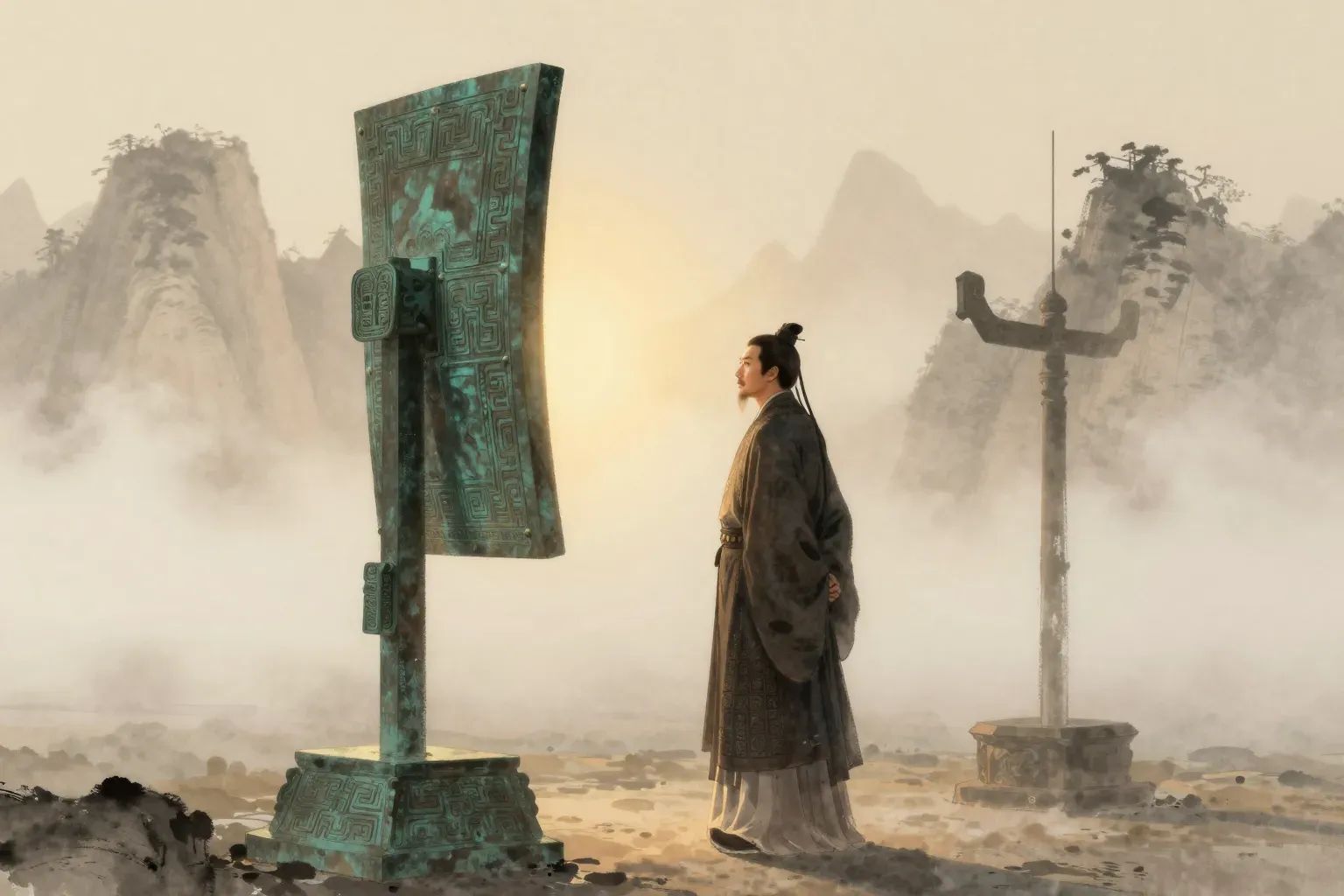
"I stand before the mirror not to admire the face looking back at me, but to meet the general I have not yet become — and ask whether I am ready for the battle ahead."
Sun Tzu wrote it more than two thousand years ago, yet the words land with the force of something spoken this morning: know yourself and know your enemy, and you will not be imperilled in a hundred battles. Most people read that line and think about strategy — about competitors, opponents, obstacles in the world. But the deeper teaching is the one we keep avoiding: before you can know any external adversary, you must first stand before the mirror and truly know the person looking back. This article explores why genuine self-knowledge is the foundation of every meaningful decision you will ever make; why most of us walk through life with a blurred, distorted reflection of ourselves; and how a three-step method drawn from the Art of War — paired with a practical four-week plan — can help you see yourself clearly, perhaps for the first time.
Imagine a general on the eve of a great campaign. The lamps are burning low. The maps are spread across the table. Around him, advisors speak of terrain, of weather, of the strength of the enemy's northern flank. But the general has stepped away. He is standing alone before a bronze mirror — the kind that reflects not in glass but in polished metal, honest but imperfect, showing you the shape of who you are without the flattery of modern surfaces. He is not checking his armour. He is asking himself a harder question: Do I truly know my own limits? Do I understand the fears I carry into this battle? Am I making this decision from wisdom — or from pride? The general who cannot answer these questions honestly is already half-defeated, no matter how brilliant his tactics. The same is true for you, in every role you inhabit — creator, parent, professional, friend.
(a) The Mirror: What Sun Tzu Really Meant by Knowing Yourself
The phrase 知彼知己,百戰不殆 — know the other, know yourself, survive a hundred battles — is the most quoted line from the Art of War. But in the tradition of classical Chinese thought, self-knowledge was never meant to be a quick inventory of your strengths and weaknesses. It was a continuous, living practice: the daily work of understanding your emotional patterns, your hidden motivations, your untested assumptions about who you are and what you are capable of.
The mirror in this tradition is not a vanity tool. It is a discipline. Generals who studied under this philosophy were expected to know precisely how fear moved through their own bodies, how pride could cloud their judgment, how exhaustion altered their risk tolerance. They were expected to know the version of themselves that emerged under pressure — and to account for that version in their plans. In modern life, we face a different kind of battlefield — the terrain of creative work, of relationships, of life choices — but the principle is unchanged: your decisions are only as clear as your self-knowledge. A blurred reflection produces blurred choices. The mirror demands honesty before it offers clarity.
What does self-knowledge look like in practice today? It means recognising the stories you tell yourself about why you haven't started yet, why you keep choosing safe options, why you react the way you do when someone challenges your ideas. It means noticing the gap between who you present yourself to be and who you actually are when no one is watching. The general in the mirror sees both — and that double vision is the beginning of everything.
(b) Why True Self-Knowledge Remains So Rare
- We confuse self-image with self-knowledge. Most of us have a well-maintained self-image — a mental portrait we keep polished and presentable. We know our job title, our skills, our values as we like to describe them. But self-image is curated. It is the face we show the world, and with enough repetition, the face we show ourselves. True self-knowledge goes underneath that portrait, into the room where our actual behaviour lives — the patterns we repeat, the reactions we can't explain, the ambitions we quietly gave up on but never consciously abandoned. Self-image is the general's dress uniform. Self-knowledge is the scar tissue beneath it.
- The feedback we receive is filtered through social kindness. The people around us — friends, family, colleagues — rarely tell us what they genuinely observe. They tell us what is comfortable to say. This is not cruelty; it is human nature. But it means we move through life receiving a softened, approximate signal about who we actually are and how we actually show up. The ancient tradition of the mirror was partly a correction for this: the reflective surface does not soften, does not hedge, does not protect your feelings. It simply shows.
- Busyness has become a form of self-avoidance. When we are constantly occupied — with work, with content, with noise — we never have to sit with the discomfort of honest self-examination. The mirror requires stillness. It requires the willingness to look without immediately moving away. In a world that rewards speed and productivity, genuine self-inquiry can feel alarmingly unproductive. And so we postpone it. We tell ourselves we'll reflect when things slow down — and things never slow down, because deep down, we are grateful for the excuse. When there is no stillness, there is no mirror. When there is no mirror, the general walks into battle blind to himself.
(c) Three-Step "Mirror Method": Pause → Reflect → Recalibrate
This method is not about brutal self-criticism. It is not about tearing down your confidence or cataloguing your flaws. It is about developing the clear-eyed, compassionate awareness of a good general — someone who sees reality accurately because their effectiveness depends on it. The three steps work together as a cycle, not a one-time event.
- Pause — Before any significant decision, conversation, or creative act, stop and create a moment of deliberate stillness. This does not need to be long. Even two minutes of genuine quiet — away from your phone, away from other voices — is enough to interrupt the automatic pilot most of us live on. The pause is not meditation (though it can be). It is simply the act of stepping out of the current of doing and asking: Who am I being right now? What am I actually feeling beneath the surface of what I am about to do? The general pauses before battle not because he lacks urgency, but because he knows that a clear mind is worth more than a head start. Example: "Before I replied to that difficult email, I stopped and noticed I was feeling defensive — not wronged. That one pause changed the entire tone of my response."
- Reflect — Once you have paused, bring honest curiosity to what you find. Not judgment — curiosity. Ask the questions a fair witness would ask: What pattern am I repeating here? Is this decision coming from a place of genuine clarity, or from fear of something I haven't named yet? What would I do if I weren't trying to protect my self-image? The reflection step is where the bronze mirror does its work. It shows you not just what you plan to do, but the emotional and psychological terrain you are actually navigating. Generals who practiced this step were known for making decisions that seemed counterintuitive — because they had seen clearly that their first instinct was driven by pride or anxiety rather than strategic wisdom. Write it down if you can. The act of putting words to what you observe inside yourself accelerates the clarity dramatically. Example: "I wrote three sentences about why I kept delaying the project launch. By the third sentence, I had named the real reason: I was afraid the work wasn't good enough yet — and I realised it probably never would feel good enough if I kept waiting."
- Recalibrate — With what you have seen, adjust. This is not the same as changing your mind — sometimes reflection confirms that your original course was right. Recalibration means bringing your actions into alignment with your clearest, most honest self, rather than with the self-image you have been unconsciously performing. It might mean a small shift in tone. It might mean a significant change in direction. It might mean simply proceeding with the same plan but with a different quality of presence — less defended, more genuine. The general who recalibrates is not weak. He is adaptive. He is using the most accurate information available — which is the truth of his own inner state — to make the best next move. Example: "After reflecting, I realised I was building my business around what I thought would impress people rather than what genuinely excited me. Recalibrating didn't mean starting over — it meant redirecting my energy toward the parts that were actually alive."
(d) Four-Week "Mirror Practice" Plan
This plan asks very little of your schedule and a great deal of your honesty. Each week builds on the last. By week four, you will not have solved self-knowledge — it is a lifelong practice — but you will have established a relationship with your own reflection that most people never develop.
| Week | Focus | Daily Practice |
|---|---|---|
| Week 1 | Meet the mirror — begin honest observation | Each evening, write two sentences: "Today I acted from ___" and "The feeling underneath that was ___". No editing, no judgment — just observation. |
| Week 2 | Identify your recurring patterns | Review your Week 1 notes. Look for what repeats. Write one sentence naming your most consistent pattern: "When I feel ___, I tend to ___." |
| Week 3 | Practise the pause in real decisions | Before each significant interaction or choice, pause for two minutes. Ask: "Am I acting from my clearest self, or from a story I'm telling myself?" Note the difference. |
| Week 4 | Recalibrate one area of your life | Choose one decision, project, or relationship where your honest reflection has revealed misalignment. Take one small, concrete step to bring it back into alignment with who you actually are. |
The temptation, especially in week one, will be to write what sounds good rather than what is true. Resist this. The mirror has no use for flattery. What you are building across these four weeks is not a cleaner self-image — it is a more honest relationship with the person who actually shows up in your life. That relationship is the foundation of every good decision you will make from here.
Self-connection Mini Practice
Before you move on to the next thing — the next article, the next task, the next distraction — take five minutes with these three questions. Write the answers somewhere, even roughly. The act of writing anchors reflection in a way that thinking alone rarely does.
- When did you last make a decision that felt "off" afterward — not because of the outcome, but because, looking back, you weren't fully honest with yourself about why you were making it? What were you actually feeling beneath the surface of that decision? What were you protecting?
- If you held up an honest mirror to the version of yourself you present to the world versus the version that exists when no one is watching — where is the largest gap? Not the most shameful gap, not the most dramatic — simply the largest. What lives in that space?
- This week, choose one area of your life — work, a relationship, a creative project — where you suspect you have been operating from a story rather than from clear self-knowledge. What is one small act of honest reflection you could bring to that area in the next seven days?
There are no correct answers. There is only the quality of your willingness to look.
Sun Tzu's mirror has been waiting for you longer than you realise. The general who knows themselves does not move through life reacting — they move through it responding, with the clarity that comes only from honest self-examination. Every battle you face — every difficult conversation, every creative risk, every life choice — is won or lost before it begins, in the quality of the relationship you have with your own reflection. The mirror does not ask you to be perfect. It asks you to be honest. And in that honesty, you will find something more useful than confidence: you will find ground.
If you're open to more reflections, symbols, and ancient wisdom guiding your path to self-knowledge and inner clarity: 👉 Tap here to explore more about self-knowledge, identity clarity & the art of knowing yourself. When you see yourself clearly — you don't just make better decisions — you become someone who trusts them.
Frequently Asked Questions
What does Sun Tzu mean by "know yourself" in the Art of War?
Sun Tzu's phrase 知彼知己 — know the other and know yourself — goes far beyond listing your strengths and weaknesses. In the classical Chinese tradition, self-knowledge was a continuous living practice: understanding how fear moves through your body under pressure, how pride distorts your judgment, and how exhaustion alters your decision-making. It meant knowing the version of yourself that shows up when things get hard, and accounting for that version in every plan you make.
Why is genuine self-knowledge so difficult to develop?
Three forces work against it: we confuse our carefully maintained self-image with actual self-knowledge; the feedback we receive from others is softened by social kindness and rarely reflects what people truly observe; and modern busyness provides a continuous excuse to avoid the stillness that honest self-examination requires. The result is that most people move through life with a blurred, approximate picture of who they actually are — which produces blurred, approximate decisions.
What is the Mirror Method and how does it work?
The Mirror Method is a three-step cycle — Pause, Reflect, Recalibrate — drawn from the Art of War's emphasis on accurate self-assessment before action. The Pause interrupts automatic behaviour and creates deliberate stillness. The Reflect step brings honest, curious inquiry to your emotional and psychological state. The Recalibrate step adjusts your actions to align with your clearest self rather than the self-image you have been unconsciously performing. Used as a regular practice, it builds the kind of self-awareness that improves every decision you make.
How do I know if I'm doing the Mirror Practice correctly?
The strongest indicator is discomfort. If your daily two-sentence reflections in Week 1 feel slightly uncomfortable to write — if you catch yourself tempted to write what sounds good rather than what is true — you are doing it correctly. The mirror has no use for flattery. A practice that consistently produces comfortable, flattering observations is almost certainly a practice of polishing self-image rather than developing self-knowledge. The goal is not to feel worse about yourself; it is to see yourself more accurately.
Can self-knowledge actually improve real-world decision-making?
Yes — and the mechanism is specific. Most poor decisions are not the result of insufficient information about the external situation; they are the result of distorted self-knowledge driving the interpretation of that information. A person who doesn't recognise their own fear will mistake it for legitimate caution. A person who doesn't see their own pride will mistake it for principled refusal. When your self-knowledge is clearer, your interpretation of situations becomes more accurate, your emotional responses become more proportionate, and your choices become more genuinely aligned with what you actually want and value.