The Resilience of Bamboo - Sun Tzu's Nine Adaptations and the Art of Mental Flexibility
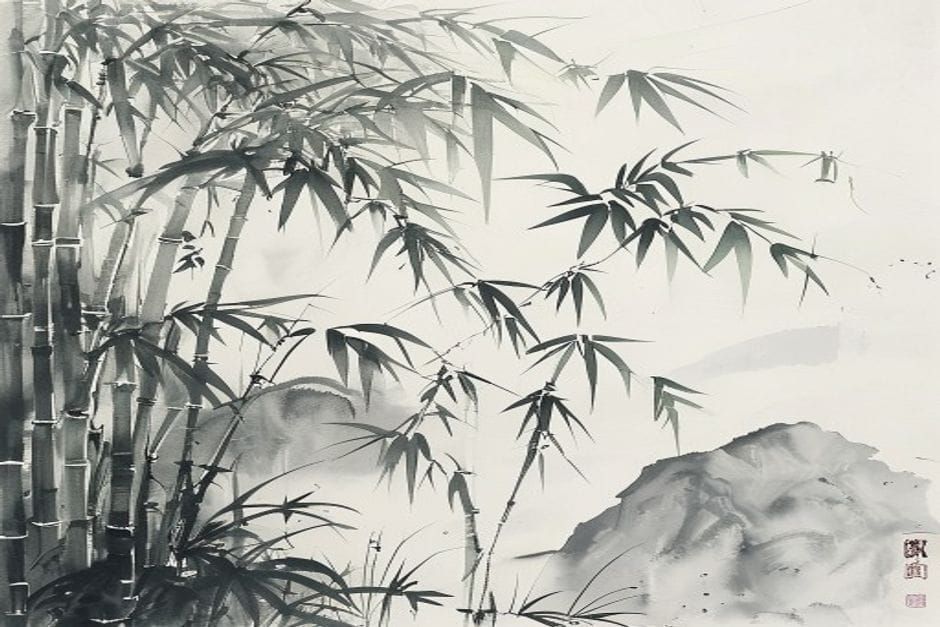
"The general who understands the advantage of the nine adaptations knows how to use his troops. The one who does not, though he knows the lie of the land, cannot make use of it."
— Sun Tzu, The Art of War, Chapter VIII: The Nine Adaptations
Sun Tzu's eighth chapter, 九變篇, is often translated as "The Nine Variations" or "Nine Adaptations." Its subject is not strategy in any narrow military sense — it is the capacity to hold a plan lightly enough that when circumstances change, you can release the plan without losing yourself. The general who cannot adapt, Sun Tzu writes, will fail even when he possesses superior forces, superior intelligence, and superior terrain. Why? Because the battlefield is always changing, and the mind that insists on yesterday's map is more dangerous than any enemy. This same principle governs every domain of modern life where the conditions of the terrain shift faster than our mental models can update — which is to say, most of the domains that matter most to us.
In the mountains of Sichuan province, bamboo grows in dense forests where the winters bring heavy snow and summer typhoons arrive without warning. The trees nearby — pine, oak, cedar — deal with these forces through rigidity, relying on the strength of their wood. Many of them shatter. The bamboo bends. It bends so far in a storm that its tips nearly touch the ground, and then, when the storm passes, it rises again: unchanged, unhurt, still growing. Ancient Chinese scholars observed this behaviour for centuries and made bamboo one of the "Four Gentlemen" of classical painting — symbols of ideal character. They were not celebrating passivity. They were celebrating the highest form of active intelligence: knowing when to yield, when to hold, and how to distinguish between the two. Sun Tzu understood this distinction intimately. His nine adaptations are nine lessons in the same art.
(a) The Bamboo 竹: What the Nine Adaptations really teach about mental flexibility
Bamboo is not soft. Its tensile strength exceeds that of many metals. What makes it flexible is not weakness but structure — the hollow core, the segmented joints, the way its fibres run along rather than across the line of force. When pressure is applied, bamboo does not resist frontally. It redirects, distributes, and returns. This is precisely the mental architecture Sun Tzu describes in the nine adaptations chapter. The general who adapts is not the one who abandons his principles — he is the one whose principles are deep enough to accommodate changing circumstances without losing their essential direction.
In psychological terms, mental flexibility is related to what researchers call "cognitive flexibility" — the ability to shift between mental frameworks as conditions demand, without excessive attachment to any single framework. This is not the same as indecisiveness or inconsistency. A person with high cognitive flexibility holds their goals firmly while holding their methods loosely. They know the difference between what must remain constant — their values, their direction, their core commitments — and what can and should change: the specific path, the timeline, the tactics. Sun Tzu's general knows why he is fighting. That never changes. How he fights changes with every river, every season, every shift in the enemy's position.
The tragedy of modern ambition is that it often produces precisely the rigidity that destroys the thing it is trying to protect. We become attached to a specific vision of success, a specific timeline, a specific method — and when circumstances intervene (as they always do), we experience this not as information to work with but as a personal failure to resist. The bamboo does not experience the typhoon as a failure of will. It experiences it as weather — real, powerful, temporary — and responds accordingly. The chapter on nine adaptations is Sun Tzu's instruction to develop a mind like bamboo: structured, directional, deeply rooted, and wholly capable of bending.
(b) Why mental flexibility keeps failing modern people
- We confuse flexibility with inconsistency. One of the deepest obstacles to developing mental flexibility is a cultural narrative that equates changing your mind with weakness, changing your plan with failure, and adapting your approach with a lack of conviction. This narrative is pervasive in self-improvement spaces where "staying the course" is celebrated almost without qualification. Sun Tzu would find this bewildering. He understood that the course must serve the destination — and when the course leads into a swamp, staying on it does not demonstrate strength. It demonstrates a failure to distinguish between commitment to purpose and attachment to method. Mental flexibility is not the absence of direction; it is the intelligence to recognise when a particular path has stopped serving the direction you have committed to.
- We plan for expected conditions rather than unknown ones. The nine adaptations chapter opens with a list of terrain types and corresponding tactical responses. But its deeper instruction is not to memorise these specific responses — it is to cultivate the habit of pre-emptive flexibility: planning not just for the expected case but for the unexpected deviation. In modern life, this means building what psychologists call "if-then" flexibility into your goals. Not just "I will exercise every morning" but "I will exercise every morning, and if that is impossible, I will walk for ten minutes at lunch, and if that is impossible, I will stretch for five minutes at my desk." This is not lowering your standards. This is building a mind with the structural resilience of bamboo — strong in the main stem, flexible at every joint.
- Our identity becomes fused with our current approach. When a plan stops working, the person who has fused their identity with that plan cannot revise it without feeling they are revising themselves. This is perhaps the deepest source of inflexibility: not stubbornness but self-protection. Sun Tzu implicitly addresses this in the nine adaptations by treating the general's ego as irrelevant to tactical decision-making. The good general does not defend the attack he launched yesterday. He assesses what is in front of him today. Developing this capacity in personal life requires the ongoing practice of separating your self-worth from your current strategy — holding your identity at the level of values and character, not at the level of specific plans.
(c) Three-Step "Bamboo Mind": Root Deep → Bend Fully → Rise Again
Sun Tzu's adaptations are not random pivots but structured responses. The three steps below create the same structure in your personal practice of flexibility.
- Root Deep — clarify what must not change — Before you can bend safely, you need to know what your roots are. These are the values, relationships, and commitments that define your direction regardless of external conditions. One person described this practice: "I spent an hour writing out what I was actually committed to — not goals, but values. Things like 'being present for my family' and 'creating work I'm genuinely proud of.' Once I had those clearly named, I found it much easier to release specific plans when they stopped working. The plan wasn't me. The values were." Sun Tzu's general always knows why the campaign exists. That purpose is the root. Everything else — timing, tactics, terrain — is negotiable.
- Bend Fully — respond to what is actually happening — Partial adaptation is worse than none. If you decide to revise a plan but maintain the same emotional resistance to change, you have not adapted — you have compromised. True bending, like the bamboo in a storm, is complete. You meet the changed condition with your full attention and genuine willingness to revise. A founder described this: "When our original product wasn't gaining traction, I spent three months defending the original idea with diminishing evidence. The moment I genuinely let go and asked 'what is actually working here?' we found a completely different application for the same technology. I had to bend fully before I could see clearly." Sun Tzu's adaptations require the general to fully abandon the inapplicable strategy — not half-abandon it while keeping one foot in the old plan.
- Rise Again — return to your direction with new information — The bamboo does not stay bent. After the storm passes, it rises — not to its previous position by force of nostalgia, but to its natural upright orientation because that is what it is. After any significant adaptation, you return to your core direction with the new knowledge the deviation has given you. One writer described this: "Every time I've had to abandon a book draft and start again, I've risen with better material than I had before. The bending wasn't a detour. It was research." Rising again after adaptation is not the same as returning to the starting point. You are the same person with the same values — but your understanding of the terrain is now deeper, your tactics more refined, your roots more firmly established than before the storm arrived.
(d) Four-Week "Bend and Rise" Plan
This plan builds mental flexibility as a practised skill rather than a personality trait, using the structure of Sun Tzu's nine adaptations as a framework for reflection and action.
| Week | Focus | Practice |
|---|---|---|
| Week 1 | Root Mapping | Write a list of your non-negotiable values — the things that define your direction regardless of circumstances. Limit yourself to five. Return to this list whenever you feel resistance to change. |
| Week 2 | Flexibility Audit | Identify one area of your life where you have been defending a particular approach despite evidence it is not working. Write honestly about what you are afraid would happen if you released it. |
| Week 3 | Tactical Revision | Choose one specific plan, method, or approach and deliberately revise it — not because it has failed, but as practice in holding strategies lightly. Observe how it feels to adapt before you have to. |
| Week 4 | Integration | Write three "if-then" flexibility statements for your most important current goal. When X happens, I will respond by doing Y. Build the bamboo joints into your planning before the storm arrives. |
By week four, you will likely notice that the anxiety around change — the feeling that adapting means failing — has quietly softened. Not because your circumstances have become easier, but because your relationship with uncertainty has shifted. The bamboo does not dread the storm. It has always known it can bend.
Self-connection Mini Practice
Sit quietly for a moment and let these questions settle before you respond to them. Write your answers if you can — the act of writing makes honesty harder to avoid.
- Where in your life are you currently behaving more like an oak than bamboo? Where are you applying frontal resistance to a force that will not yield to resistance — insisting on a specific timeline, method, or outcome that circumstances are clearly challenging? What are you afraid you would lose if you bent?
- What is the difference, for you personally, between your roots and your tactics? Take a moment to distinguish clearly between the values that define you (roots — must not bend) and the strategies you have chosen to express those values (tactics — can and should adapt). Which of your current "non-negotiables" are actually tactics in disguise?
- When you have successfully adapted in the past, what did that feel like, and what made it possible? Think of a time when you changed course and it was ultimately the right decision. What allowed you to bend? What internal shift preceded the external change? What do you know now about your own flexibility that you did not know then?
The bamboo has been growing for millions of years. It has never once braced against a storm. It has simply known, in every fibre of its structure, that the storm will pass — and that it will still be here when it does.
Sun Tzu's nine adaptations were not a manual for indecision. They were a portrait of the highest strategic intelligence: a mind rooted deeply enough in purpose that it can afford to hold every other element lightly. The bamboo does not survive the typhoon despite its flexibility. It survives because of it. In a world that changes faster than any plan can anticipate, the capacity to bend without breaking is not a secondary skill — it is the primary one. Cultivate your roots. Name what is non-negotiable. And then, when the storms come — and they will come — bend fully, rise cleanly, and grow on. The grove, untouched, waits on the other side of every wind.
If you're open to more reflections, symbols, and ancient wisdom on resilience and the art of adaptation: 👉 Tap here to explore more about mental flexibility & ancient wisdom. When you learn to bend — you don't just survive the storm — you discover exactly how deep your roots go.
Frequently Asked Questions
What are Sun Tzu's Nine Adaptations and what do they mean for everyday life?
Sun Tzu's Nine Adaptations (九變篇) is the eighth chapter of the Art of War, describing nine types of tactical situations that require departing from standard military procedure. The deeper principle is that excellence requires the capacity to adapt your methods when conditions change, rather than following a fixed plan regardless of evidence. In daily life, this means holding your goals firmly while holding your methods loosely — changing how you pursue what matters without losing sight of why it matters.
How is mental flexibility different from simply giving up when things get hard?
Mental flexibility is rooted in clear values and direction — it changes methods in service of a consistent purpose. Giving up releases both the purpose and the method simultaneously. The key distinction is the internal experience: genuine flexibility feels like a strategic reassessment made from a place of clarity and self-knowledge. Giving up feels like exhaustion or avoidance. Sun Tzu's general adapts because he understands the terrain, not because he is tired of fighting. When your adaptation is genuinely in service of your values, it is flexibility. When it is an escape from discomfort, it is avoidance.
How do I practise mental flexibility when I feel emotionally invested in a particular outcome?
The practice begins before the emotional investment becomes overwhelming. Build in regular check-ins on whether your methods are still serving your values — weekly or monthly reviews where you ask honestly: is this approach still working? This normalises the question of revision so it does not arrive only in moments of crisis. When you do feel emotionally invested, the practice is to separate the question of your worth (stable, unconditional) from the question of your current approach (up for review). You can deeply care about an outcome and still revise your strategy.
I struggle to tell whether I should persist or adapt. Is there a clear way to decide?
Sun Tzu's test was simple: does this approach still serve the objective? Ask yourself whether you are defending the current method because it is genuinely the best available option, or because changing it feels like admitting failure. If your only reason to continue is sunk-cost thinking — "I've come this far, I can't change now" — that is a signal to adapt. If you have genuine evidence that the current method, given more time or effort, will serve your purpose, that is a signal to persist. The question is about the terrain ahead, not the ground already covered.
How long does it take to develop genuine mental flexibility?
The foundational shift — separating identity from strategy — can begin to feel real within four to six weeks of deliberate practice. However, mental flexibility deepens significantly through repeated experience with actual uncertainty: navigating real changes, making real revisions, and observing that adaptation does not destroy you. Most people who develop high cognitive flexibility report that major life disruptions, navigated with awareness, accelerated their development far more than any structured practice. The storms are part of the training. The bamboo grows stronger at every joint it has survived.