Clear Eyes - Sun Tzu's Intelligence Gathering and the Lost Art of Knowing Yourself
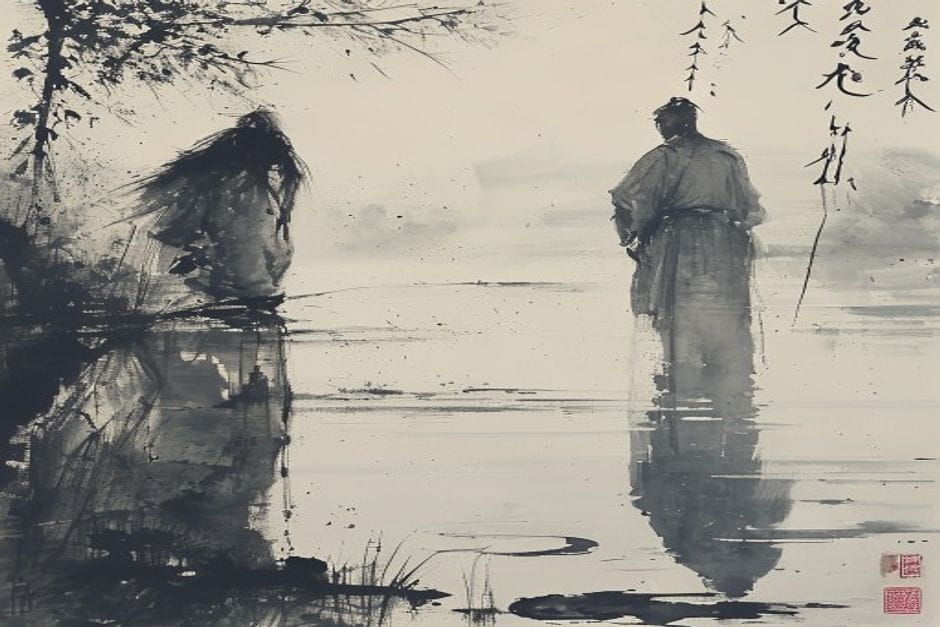
"Know the enemy and know yourself; in a hundred battles you will never be in peril. When you are ignorant of the enemy but know yourself, your chances of winning or losing are equal. If ignorant both of your enemy and of yourself, you are certain to be in peril."
— Sun Tzu, The Art of War, Chapter XIII: Intelligence
The thirteenth and final chapter of the Art of War is devoted entirely to intelligence — 用間篇, the use of spies and information. It is not, as some assume, merely a tactical manual for military deception. At its deepest level, it is a meditation on the courage and discipline required to see reality clearly — to gather true information about the terrain, the enemy, and crucially, about oneself — rather than operating on comfortable assumptions that the evidence does not support. Sun Tzu reserves his harshest words not for generals who lose battles, but for those who "stint on rewards" for intelligence, meaning those who are too proud, too fearful, or too comfortable to invest seriously in knowing what is true. Centuries later, his words find their most urgent application not on any battlefield but in the quiet, difficult work of honest self-examination.
There is an old story of a Tang dynasty painter who could render mountains, rivers, and bamboo forests with extraordinary fidelity — every brushstroke placed with the precision of someone who had spent years observing the actual shapes of actual things. When asked the secret of his skill, he said: "I have learned to see the tree, not my idea of the tree. Most painters paint their memories. I go back to the tree." The distinction he drew was between intelligence and assumption — between data gathered freshly from reality and the comfortable, unchallenged maps we carry in our heads. Sun Tzu's intelligence chapter is about this same discipline: the willingness to return, again and again, to the actual tree. To observe what is genuinely there. To update the map when the territory has changed. And to apply this discipline first and most rigorously to our knowledge of ourselves.
(a) The Eyes 眼睛: What intelligence gathering really teaches about self-awareness
Sun Tzu's final chapter opens with a paradox. He argues that the most enlightened general is also the most aggressive gatherer of intelligence — willing to spend lavishly on spies, to cultivate sources inside the enemy's camp, to cross-reference reports from multiple directions. This might seem incompatible with the image of the calm, centred leader we associate with classical wisdom. But Sun Tzu's point is precisely that equanimity without accurate information is not wisdom — it is complacency. The clear eyes of the intelligence chapter are not the detached eyes of someone who has stopped caring. They are the alert, disciplined eyes of someone who cares enough about the outcome to insist on seeing the truth.
Applied to self-awareness, this means cultivating what psychologists call metacognition: the ongoing practice of observing your own thinking, emotional patterns, habitual responses, and recurring blind spots. It means asking not just "what happened?" but "what was my role in what happened?" Not just "what do I want?" but "what do my actual behaviours, over time, reveal that I want?" Sun Tzu's general does not trust a single report. He cross-references. He sends multiple agents. He notices discrepancies and investigates them. The person developing genuine self-awareness does the same: gathering information from multiple sources — journalling, trusted feedback, observed patterns, emotional reactions — and treating discrepancies between self-perception and evidence as intelligence worth pursuing rather than noise to dismiss.
The greatest obstacle to this kind of seeing is not intellectual. It is emotional. We do not lack the capacity to see ourselves clearly. We lack the willingness. Because what the clear-eyed observer often sees is not flattering: patterns of avoidance, recurring self-deceptions, gaps between stated values and actual choices. Sun Tzu notes that effective intelligence requires the general to reward spies lavishly — because gathering true information carries real risk and real discomfort. Honest self-awareness is the same. It rewards the person willing to endure the discomfort of clear seeing with something that no amount of comfortable self-delusion can provide: genuine, navigable knowledge of where they actually stand.
(b) Why honest self-awareness keeps failing dedicated people
- We confuse self-reflection with self-criticism. Most people who try to develop self-awareness quickly discover that the practice collapses into either two dysfunctional extremes: harsh self-criticism that makes clear seeing feel punishing and unsafe, or defensive self-justification that keeps uncomfortable truths at arm's length. True self-awareness as Sun Tzu understood intelligence — the calm, accurate gathering of facts — requires a third posture: observant neutrality. The intelligence officer does not celebrate or condemn what the spy reports. He records it, analyses it, and uses it. Developing this same neutrality toward your own inner reports — observing a pattern of procrastination, say, without either self-flagellating or minimising — is the fundamental skill of self-awareness, and it is one most people have never been taught.
- We gather intelligence selectively, confirming what we already believe. Sun Tzu's chapter contains a striking warning about a specific type of unreliable spy — the "living spy" who reports back to the general, but whose reports are coloured by what they think the general wants to hear. We all have such an agent operating inside our own minds. We call it the ego. It filters incoming information to protect our existing self-image, discarding evidence that contradicts our preferred narrative and amplifying evidence that supports it. Genuine self-awareness requires something more difficult than simple introspection: it requires actively seeking disconfirming evidence. Where am I wrong about myself? Where does my self-image diverge most sharply from others' experience of me?
- We treat self-awareness as a destination rather than an ongoing practice. Many people undergo one significant period of self-examination — during a crisis, a therapy process, or a major life transition — and then consider the matter settled. But Sun Tzu's general does not gather intelligence before the campaign and then stop. He gathers it continuously, because the landscape is always changing. You are always changing. The self-awareness that was accurate and useful last year may be dangerously incomplete this year. Treating self-awareness as a continuous practice rather than a completed achievement is the structural insight at the heart of the intelligence chapter.
(c) Three-Step "Clear Intelligence": Observe → Triangulate → Update the Map
Sun Tzu's intelligence methodology had three phases: gathering, cross-referencing, and acting on what was gathered. The same structure applies to self-awareness practice.
- Observe — gather raw data without immediate interpretation — The first step is to develop the habit of watching yourself as if from a slight distance. This is not dissociation — it is the curious, non-judgmental attention of the honest reporter. One person described beginning this practice: "I started keeping a simple log for thirty days — just three sentences each evening about a moment where I noticed my behaviour diverging from my stated values. No analysis, no self-criticism. Just observation. By week three, patterns had emerged that no amount of introspective thinking had ever revealed to me. I could see my actual behaviour, not my story about my behaviour." Sun Tzu's spies were instructed to observe and report — not to interpret or advise. Train yourself to gather before you judge.
- Triangulate — seek intelligence from multiple, independent sources — Self-report is the least reliable intelligence source, because we are the least objective observers of ourselves. Triangulation means seeking information from trusted sources outside your own perspective. One leader described this approach: "I asked three people who knew me well — in different contexts — to tell me honestly one thing I was consistently not seeing about myself. The answers were uncomfortable and completely consistent with each other. That consistency was the intelligence. No single report would have been trustworthy. All three pointing in the same direction was impossible to dismiss." Sun Tzu never trusted a single spy. Neither should you trust a single source of self-knowledge.
- Update the Map — revise your self-model based on what the intelligence reveals — The final step is the one most people avoid: actually changing their self-understanding based on what has been gathered. One professional described this: "I had always told myself I was a good listener. The pattern in my journal and the feedback from colleagues both clearly showed I was actually quite impatient in conversations — physically still, but mentally already forming my response. Updating that map was humbling. But once I could see the gap, I could work with it. I couldn't work with an illusion." The intelligence is only as valuable as the action it generates. Seeing clearly must lead to genuine revision — not just of your strategies, but of the story you tell yourself about who you are and what you are capable of.
(d) Four-Week "Intelligence Corps" Plan
This plan builds the infrastructure of genuine self-awareness over four weeks, following Sun Tzu's methodology of systematic, multi-source intelligence gathering.
| Week | Focus | Practice |
|---|---|---|
| Week 1 | Raw Observation | Each evening, write one neutral observation about a moment when your behaviour did not match your self-image. No judgment — just the fact. Build the practice of watching without reacting. |
| Week 2 | Pattern Recognition | Review your Week 1 observations. What themes emerge? Write a paragraph describing one recurring pattern that surprised you. Treat it as intelligence — interesting and actionable, not damning. |
| Week 3 | External Intelligence | Ask one trusted person — a close friend, a colleague, a partner — for honest feedback on one specific area. Frame it as curiosity, not crisis. Listen without defending. Record what they say. |
| Week 4 | Map Revision | Write a one-page honest self-assessment that incorporates everything gathered in the previous three weeks. What is different from your starting self-image? What one action would honour this new, clearer picture of who you are? |
By the end of week four, you will likely hold a more nuanced, more grounded, and ultimately more compassionate picture of yourself than you began with. Not because self-awareness is kind — it often is not. But because the alternative, operating in the dark, is so much more costly than the discomfort of clear sight.
Self-connection Mini Practice
These questions are not comfortable. They are not meant to be. Take your time with each one, and write if you can — the act of writing makes evasion harder.
- What is one belief about yourself that your actual behaviour, observed consistently over time, does not support? Not a minor inconsistency, but a significant gap between who you believe yourself to be and how you actually show up when no one is watching or when the stakes are low. What would the neutral observer's report say about this gap?
- Who in your life sees you most clearly — and what do you suspect they see that you are reluctant to ask about? Is there a trusted person whose perception of you you consistently avoid testing? What might you discover if you asked them directly? What are you protecting by not asking?
- What would change in your most important relationships and decisions if your self-knowledge were ten percent more accurate? Imagine the practical consequences of seeing one key blind spot clearly for the first time. What choice would you make differently? What conversation would you finally have? What strategy would you revise?
The clear-eyed person is not someone who has found a way to feel good about everything they see. They are someone who has found the courage to look — and the wisdom to use what they find.
Sun Tzu placed his intelligence chapter last in the Art of War for a reason. All the strategies, all the terrain principles, all the tactical brilliance in the preceding twelve chapters are contingent on one thing: accurate information. Without it, every strategy is built on fog. With it, even modest resources can accomplish extraordinary things. The same is true of the self. Every plan for growth, every commitment to change, every aspiration for a more intentional life depends on one prior condition: honest, courageous, ongoing knowledge of who you actually are. Open your eyes. Not because what you see will be comfortable. But because what you cannot see is already running your life without your permission.
If you're open to more reflections, symbols, and ancient wisdom on self-awareness and the courage to see clearly: 👉 Tap here to explore more about self-awareness & inner intelligence. When you see yourself clearly — you don't just know your weaknesses — you discover the precise points where your growth becomes possible.
Frequently Asked Questions
What does Sun Tzu's intelligence chapter teach about self-awareness?
Sun Tzu's intelligence chapter (用間篇) argues that no strategy can succeed without accurate information about both the enemy and oneself. Applied to personal growth, it teaches that self-awareness — the honest, continuous gathering of information about your patterns, blind spots, and behavioural tendencies — is not a luxury or a psychological exercise. It is the foundational intelligence work that determines whether your plans for change are built on reality or on comfortable fiction. The general who skimps on intelligence loses before the battle begins. The person who skimps on self-knowledge loses before the plan is formed.
How is this kind of self-awareness different from therapy or journalling?
Therapy and journalling are excellent intelligence-gathering tools — but they are single-source tools. Sun Tzu's methodology requires multiple independent sources that can be cross-referenced for accuracy. The self-awareness practice described here combines personal observation, pattern recognition over time, external feedback from trusted sources, and deliberate map-revision. Therapy provides depth in one direction; this practice provides breadth across multiple angles simultaneously. Both are valuable. The key addition is the systematic use of external perspectives to calibrate self-perception against others' actual experience of you.
How do I seek honest feedback from others without making the relationship uncomfortable?
Frame the request around genuine curiosity rather than personal crisis. Instead of "I need you to tell me what's wrong with me," try "I'm working on understanding myself better and I trust your perspective — is there something you consistently notice about how I show up that you think I might not be fully aware of?" Give the person permission to be honest by making clear you can handle it and won't react defensively. And then — critically — honour that permission when they respond by receiving the feedback with genuine gratitude rather than explanation or justification.
What if the honest picture of myself is too discouraging to be useful?
This is the most common fear about honest self-awareness, and it is worth naming directly: clear seeing, done with the right orientation, is not demoralising — it is liberating. The discouragement comes from evaluating what you see rather than simply using it. A military intelligence officer who receives a difficult report about enemy strength does not collapse into despair — he uses the information to revise his strategy. When you observe a genuine limitation or blind spot in yourself, the useful question is not "what does this say about my worth?" but "given this, what is my best available strategy?" The information is not a verdict. It is a map.
How often should I do this kind of self-assessment?
Sun Tzu's general gathered intelligence continuously during a campaign, not just at the outset. A practical rhythm for most people is: brief daily observation (three sentences of neutral self-reporting each evening), weekly pattern review (fifteen minutes reviewing the week's observations), and quarterly deeper assessment (incorporating external feedback and map revision). The daily practice is the most important — it prevents the accumulation of comfortable blind spots that monthly or annual reviews consistently miss, because the data is gathered too close to real events to be significantly distorted by retrospective narrative.