The Value of Wise Counsel - What the Zizhi Tongjian Teaches About Building the Team That Builds You
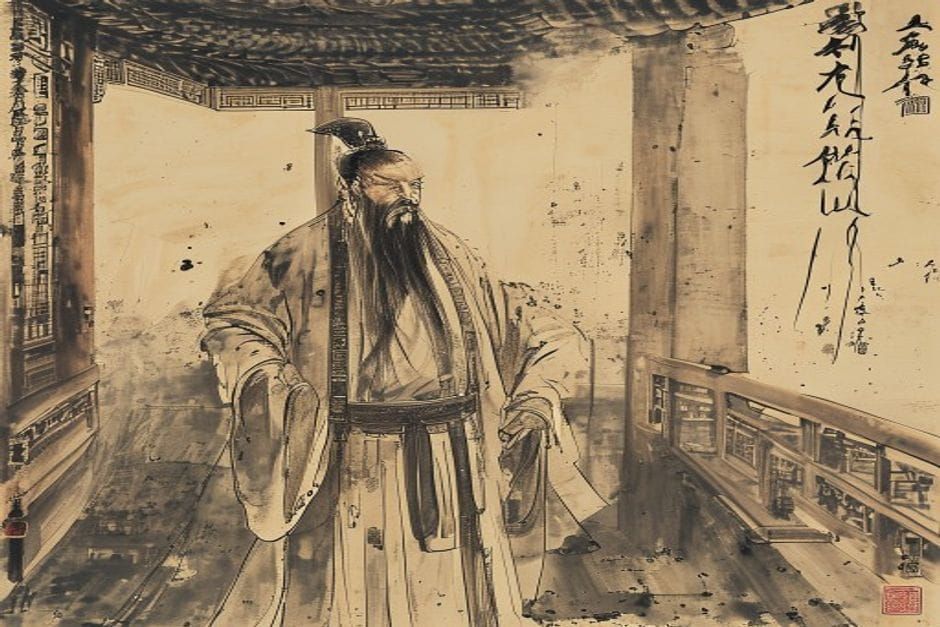
"The ruler who employs the wise prospers; the one who employs flatterers declines. This is the pattern of all ages, without exception."
— Sima Guang, Zizhi Tongjian (資治通鑑), Preface
The Zizhi Tongjian — "Comprehensive Mirror in Aid of Governance" — is one of the most ambitious historical projects ever undertaken. Completed by the Northern Song scholar Sima Guang in 1084, it chronicles nearly fourteen hundred years of Chinese history across sixteen dynasties, from 403 BCE to 959 CE. Its purpose, as Sima Guang stated explicitly, was not merely to record the past but to extract from it the patterns that govern human success and failure — particularly the patterns of leadership. Reading through its three hundred volumes, a single theme emerges with the relentless force of a natural law: dynasties rise when rulers surround themselves with honest, capable ministers who speak truth. They fall when rulers prefer ministers who tell them what they want to hear. The lesson is ancient. Its application is immediate.
In the early Tang dynasty, Emperor Taizong maintained a practice that struck his contemporaries as extraordinary: he actively sought out officials who disagreed with him. One minister, Wei Zheng, was famous for the bluntness of his remonstrance — he challenged the emperor's judgments in open court with a directness that bordered on insubordination. Taizong not only tolerated this; he institutionalised it, establishing formal channels for ministers to submit written criticisms of imperial decisions. When Wei Zheng died, Taizong reportedly wept and said: "With a bronze mirror, I can straighten my clothes. With history as a mirror, I can see the rise and fall of dynasties. With Wei Zheng as my mirror, I could see my own mistakes." This is the Zizhi Tongjian's core teaching about the wise minister: they are not servants. They are mirrors. And the leader who removes their mirrors, preferring the comfortable darkness of flattery, loses the capacity to navigate the very world they are trying to govern.
(a) The Wise Minister 賢臣: What employing people well really teaches about human flourishing
The Chinese concept of the wise minister — 賢臣 — carries connotations that go well beyond professional competence. The character 賢 means virtuous, worthy, and capable simultaneously. A wise minister in the classical sense was not simply someone with useful skills. They were someone whose character was trustworthy enough that their counsel could be acted upon even when it was uncomfortable. They told the truth not because they were fearless — remonstrance in imperial China often carried mortal risk — but because they understood that their highest service was honesty, and that a ruler deprived of honest counsel was already on the road to ruin.
In personal life, this translates into what we might call your "inner court" — the people whose judgment, honesty, and genuine alignment with your wellbeing you draw upon when making consequential decisions. Most people assemble this inner court accidentally: friends who became close through circumstance rather than selection, colleagues whose proximity creates an illusion of intimacy, family members whose loyalty is genuine but whose honest feedback is filtered through complex emotional histories. The Zizhi Tongjian suggests a more intentional approach. Not every relationship needs to be an advisory one. But the ones you turn to for genuine counsel — about your career, your character, your choices — should be chosen with the same care a ruler would apply to selecting ministers who would help govern an empire.
The measure of a wise counsellor in Sima Guang's framework was not agreement but alignment. The wise minister agreed with the ruler's values and goals — they wanted the dynasty to flourish, the people to prosper, the ruler to succeed. But precisely because they shared this alignment, they refused to flatter, to minimise, or to tell comfortable lies. The modern equivalent is the trusted friend or mentor who says, not because they enjoy being difficult but because they genuinely care about your outcome: "I think you're wrong about this, and here is why." These people are rarer than we acknowledge. They are worth more than we often show.
(b) Why building a team of wise counsel keeps disappointing ambitious people
- We optimise for comfort rather than honesty in our closest relationships. The Zizhi Tongjian documents dozens of cases where rulers who had access to genuinely honest ministers gradually stopped consulting them — not because the ministers became less wise, but because their honesty became increasingly uncomfortable as the ruler's ego grew. This drift toward comfortable counsel is not a failure of character but a structural human tendency. We surround ourselves with people who validate our decisions because the alternative — ongoing challenge from those closest to us — is emotionally expensive. Over time, the inner court fills with voices that amplify our confidence and soften our doubts, until the voices of honest counsel are so rarely heard that they cease to register even when they speak.
- We mistake loyalty for alignment. One of the most common and costly errors documented in the Zizhi Tongjian is the ruler who equates personal loyalty with genuine counsel. The minister who agrees with everything, supports every decision, and never delivers difficult news may feel like a devoted ally — and in terms of personal loyalty, they may genuinely be. But their counsel is useless precisely because it is filtered through the need to please. In personal relationships, the equivalent is the friend who is personally devoted to you but whose investment in your comfort prevents them from ever delivering the honest assessment you actually need. Loyalty and honest counsel are not mutually exclusive — but they are not the same thing, and confusing them consistently produces advisors who are affectionate and useless simultaneously.
- We underinvest in relationships before we need them. The wise ministers documented in the Zizhi Tongjian were not strangers called upon in a crisis. They were long-cultivated relationships built through years of shared work, proven trustworthiness, and demonstrated alignment. Most modern people build their inner court reactively — seeking counsel when a crisis has already arrived, turning to whoever is available rather than to whoever has been genuinely prepared for the role. Building genuine advisory relationships requires investment when nothing is wrong: maintaining contact, expressing genuine curiosity, reciprocating support, and creating the conditions where honest conversation feels safe enough to happen. The time to cultivate your wise ministers is not when you need them. It is now.
(c) Three-Step "Inner Court Assembly": Identify → Cultivate → Consult Honestly
Sima Guang's portrait of effective rulership always begins with deliberate choice: the ruler who succeeds does not simply receive counsel — he actively seeks out, selects, and maintains the conditions in which wise counsel can flourish. The same architecture applies in personal life.
- Identify — map your current inner court honestly — Before you can improve the quality of your counsel, you need to see clearly who currently provides it. One person described this exercise: "I wrote down the five people I most often turned to when I had a significant decision to make. Then I asked myself: when was the last time any of them told me something I genuinely didn't want to hear? When I couldn't answer for three of the five, I realised my inner court had gradually become a validation chamber. Not because the people weren't trustworthy — but because I'd subtly trained them to understand that honest challenge wasn't welcome." Map your current inner court: who provides emotional support, who provides honest assessment, who provides relevant expertise? Most people discover significant gaps in at least one of these categories.
- Cultivate — invest in relationships before you need them — Building genuine advisory relationships requires specific conditions: psychological safety (the person knows their honesty won't damage the relationship), reciprocity (you also serve their growth), and a track record of how you receive difficult feedback. One person described their practice: "I started telling people explicitly when they'd told me something useful that I hadn't wanted to hear. I'd say 'You were right about that and I want you to know I'm grateful you said it.' Over time, this created an environment where honesty was acknowledged and valued. The quality of the counsel I received improved dramatically — not because the people changed, but because they knew their honesty landed well."
- Consult honestly — ask questions that invite genuine challenge — The quality of the counsel you receive depends significantly on the quality of the questions you ask. Vague questions invite vague answers. Questions that already contain your preferred answer invite confirmation. One leader described shifting her approach: "I stopped asking 'What do you think about this plan?' and started asking 'What would make this plan fail? What am I not seeing? Where do you think I'm most likely to be wrong?' The questions opened different parts of people's intelligence. The advice became dramatically more useful." Sun Tzu's general did not ask his spies whether the enemy was strong. He asked how strong, in what ways, and where. Specific questions produce intelligence. General questions produce reassurance.
(d) Four-Week "Inner Court" Plan
This plan builds the infrastructure of genuine wise counsel over four weeks, following Sima Guang's framework of deliberate selection, cultivation, and active consultation.
| Week | Focus | Practice |
|---|---|---|
| Week 1 | Court Mapping | List your five closest advisors. For each, write one sentence about the last honest challenge they offered you and how you received it. Note any gaps in expertise, honesty, or alignment with your actual values. |
| Week 2 | Cultivation Investment | Reach out to one person in your existing network whose honest judgment you respect but rarely consult. Express genuine appreciation for something they've previously said or done. Rebuild the bridge before you need to cross it. |
| Week 3 | Quality Questions | Bring one current significant decision to your most trusted advisor. Instead of asking for their opinion, ask: "Where am I most likely to be wrong here? What would you tell me if you weren't worried about my reaction?" Write down their answer in full before you respond. |
| Week 4 | Gap Identification | Identify one area of your life — creative, professional, relational, health — where your current inner court has no genuine expertise or honest perspective. What would it mean to find one person who could fill that gap? What is the first step toward that relationship? |
The Zizhi Tongjian spans fourteen centuries, but its primary lesson about human counsel takes roughly four weeks of honest practice to feel in your own life. By the end of this plan, you will likely have one conversation that unsettles you, one relationship that feels newly honest, and a clearer picture of both where your inner court is strong and where it needs to grow.
Self-connection Mini Practice
These questions are about your relationships — which makes them, for most people, the most personally revealing questions in any self-growth practice. Write honestly.
- Who is the person in your life most likely to tell you what you need to hear rather than what you want to hear — and when did you last genuinely listen to them? Think carefully about the last time this person offered you honest feedback. How did you receive it? Did your reaction make it more or less likely they would do so again? What does this tell you about the conditions you have created for honest counsel?
- Where in your current inner court is flattery masquerading as loyalty? Is there a relationship you value partly because the person consistently validates your decisions, rarely challenges your thinking, and makes you feel confident and capable? What would you discover if you asked this person to be more honest? What are you protecting by not asking?
- What quality of character, expertise, or honest perspective is most conspicuously absent from the people you currently turn to for counsel? Is there a domain of your life — your finances, your creative ambitions, your emotional health, your long-term direction — where no one in your current inner court has genuine knowledge or the relationship trust to speak honestly? What would change if that gap were filled?
Emperor Taizong's bronze mirror showed him his clothes. Wei Zheng showed him himself. The first is convenient. The second is essential. Find your Wei Zheng. Treat them accordingly.
Sima Guang spent nineteen years compiling the Zizhi Tongjian. He was not writing a history of battles or emperors. He was writing a manual for human beings who wanted to make better choices — and whose capacity to make better choices depended, above all, on the quality of the counsel they were willing to receive. The lesson of fourteen centuries is not subtle: surrounding yourself with honest, capable, genuinely aligned people does not diminish your autonomy. It extends it. The emperor who had no wise ministers did not make free decisions. He made decisions constrained by his own blind spots, his own flattery-fed illusions, his own unchallenged errors. The one who sought wise counsel saw further, decided better, and built something that lasted. So can you.
If you're open to more reflections, symbols, and ancient wisdom on building the relationships that build you: 👉 Tap here to explore more about wise counsel & the people who shape your growth. When you choose your inner court wisely — you don't just make better decisions — you become the kind of person who deserves the counsel of the wise.
Frequently Asked Questions
What is the Zizhi Tongjian and why does it matter for personal development?
The Zizhi Tongjian (資治通鑑) is a monumental Chinese historical chronicle covering nearly 1,400 years of history across sixteen dynasties, compiled by scholar Sima Guang in 1084. Its explicit purpose was to extract recurring patterns of successful and unsuccessful governance. For personal development, its value lies in its empirical approach to human behaviour: across hundreds of documented cases, it consistently shows that the quality of counsel a leader receives — honest and capable versus flattering and self-serving — is the primary predictor of whether they thrive or fail. These patterns translate directly to individual life choices.
How do I find wise counsel if I don't have obvious mentors or advisors in my life?
Wise counsel does not require formal mentors or advisory relationships. It requires identifying people who demonstrate two qualities: genuine alignment with your wellbeing (not your comfort) and the willingness to offer honest perspective. These people exist in most people's networks but are underutilised because we haven't explicitly cultivated those dimensions of the relationship. Start by looking for people who have given you honest feedback in the past that proved correct — even if it was uncomfortable at the time. Those are your natural wise counsellors. Invest in those relationships deliberately, and they will develop over time into genuine advisory resources.
How do I know the difference between a wise counsellor and someone who is simply critical?
Wise counsel, as the Zizhi Tongjian describes it, is always in service of your success and wellbeing — the minister wants the dynasty to flourish. Criticism without alignment can come from many places: competitiveness, unresolved resentment, a genuine philosophical difference in values, or simply a habitual negativity unrelated to your specific situation. The test is simple: does this person's difficult feedback consistently prove to be in your interest, even when it is uncomfortable? Does their critique point toward something actionable? Does it come with genuine care for the outcome? Honesty that serves you feels different from honesty that serves the person delivering it, even when the content is similar.
I already have trusted people around me. Why do I still make consistently poor decisions in certain areas?
The most likely explanation is that your trusted people lack coverage in specific areas — they are wise counsellors in the domains they know you in, but not in the domain where your decisions are consistently poor. A close friend who knows your emotional life well may have no insight into your financial decisions. A professional mentor with deep expertise in your field may have no visibility into the relational patterns that keep derailing your collaborations. Map the specific domain where your decisions fail and ask honestly: who in my current inner court has genuine knowledge and honest perspective on exactly this area? Often the answer is no one — and that absence is the entire explanation.
What if the people I trust most keep giving me advice I disagree with?
The Zizhi Tongjian documents this exact situation repeatedly: the ruler who receives consistent counsel from multiple trusted advisors and overrides it based on personal preference. Sometimes the ruler is right — wise ministers can be wrong. But the pattern across the historical record is clear: when trusted advisors consistently point in one direction and a ruler consistently overrides them, the override is more often wrong than right. The useful question is not "why are they wrong?" but "what would have to be true for them to be right, and what do I know that would definitively establish that they are wrong?" If the answer is unclear, the wiser course is usually to pause rather than override.